

Tomorrow, June 10, marks the 85th anniversary of when Bob White was shot in the back of the head in a packed Polk County, Texas, courtroom. His killer paid $500 and was home before dinner. I learned of his story several years ago, and it has never left me. I don’t think you will either.
In 1937, Bob White lived with his wife, Ruby Lee White, in Houston, when his mother asked him to help her on the cotton farm where she was working in Livingston. Needing the money, Bob White agreed and headed up to Polk County. During that sweltering August summer, the wife of a prominent farmer, WS Cochran, claimed to have been raped in her home.
However, there was no evidence. Ruby Cochran told law enforcement that her attacker “was barefooted, that he had a very offensive breath, and was undoubtedly a n*gro.” She was unable to provide any identifying information to the Sheriff about the attacker’s appearance. She didn’t even know the color of his skin. She just assumed it because of her attacker’s bad breath.
Not having any evidence or suspects, the Sheriff went to the farm where Bob White was working and arrested over a dozen Black men. The Texas Rangers also came in from Houston to help.
The men who could provide an alibi were let go, but those without an alibi were lined up and given lines to recite.
Ruby Cochran listened to each one, and then, when Bob White recited the selected words, Ruby Cochran told the Sheriff, “That’s him.” She was sure of it.
A lynch mob had already formed in the town, waiting to kill whoever they thought was the man who raped Ruby Cochran. The Rangers had to stand guard outside the jail to ensure they didn’t storm it.
For a week, the Sheriff should take Bob White out of jail and drive him to another location. The Sheriff tied him to a tree and brutally beat him every day. After a week, Bob White couldn’t withstand it anymore and signed a confession. It was later reported that he signed the confession while tied to the tree. Bob White could not read or write.
Bob White was found guilty and sentenced to death.
The all-white jury deliberated for less than two hours, found Bob White guilty, and sentenced him to death. He appealed the court’s decision.
Both the San Antonio and Houston branches of the NAACP got involved. Bob White was railroaded, and everyone knew it.
His appearance didn’t identify him. There were no fingerprints, bloodhounds didn’t match his scent, and no evidence to tie him to the crime. White appealed his sentence.
Then, in March 1940, the Supreme Court overturned Bob White’s conviction because he was subject to inhumane treatment and a forced confession.
Bob White headed back to court for a retrial in 1941. Unfortunately, the trial never happened. On June 10, 1941, as the jury was being selected for the trial, WS Cochran, the husband of the alleged rape victim, walked up to Bob White and, from about 3 feet away, shot him in the back of the head.
Bob White was railroaded. He was accused of a crime, yet there was no evidence implicating him. The victim didn’t even know the color of the perpetrator’s skin. She said because he had bad breath, he must have been Black.
White maintained his innocence until the Sheriff tied him to a tree and beat him for days, forcing him to sign something he couldn’t even read.
Bob White was protected from lynch mobs multiple times, sentenced to death, and then had his sentence overturned. At the time of his murder, he had already served 5 years in prison for the alleged crime.
WS Cochran shot Bob White in front of a packed courtroom of 300 people. After pulling the trigger, he calmly handed his pistol over to one of the attorneys standing by and then surrendered to the court’s deputy.
Cochran paid the $500 bond and walked out of jail later that afternoon.
Only one week after Cochran killed Bob White, his case went to the grand jury. On June 16, 1941, the grand jury deliberated for only two minutes and found Cochran not guilty. He never even served one night in prison.
Eighty-five years later, the players have changed, but the American justice system is unmistakable.
This week, a South Carolina jury took less time than it takes to eat lunch to decide that a 61-year-old store owner was justified in shooting a 14-year-old Black child in the back.
Cyrus Carmack-Belton didn’t steal anything. Video evidence proved it. But Rick Chow and his son chased that child more than 130 yards from the store and shot him in the back while he ran for his life. Cyrus bled out on the side of the road.
Cyrus’s mother, Nicole Carmack, said what every mother who has ever lost a child to this system has said, “I try to have faith in the justice system, but they have failed Cyrus. They failed my baby.”
His father, Troy Belton, said, “It’s just like you just can’t get justice nowhere.”
The claim that a 14-year-old boy stole four bottles of water was false. The evidence said so. The video said so. Cyrus Carmack-Belton said so with his feet when he tried to run away from two grown men who wanted him dead over nothing.
In 1937, Ruby Cochran decided Bob White was guilty because she didn’t like the way his voice sounded. In 2023, Rick Chow decided Cyrus Carmack-Belton deserved to die over a water bottle he didn’t even take.
Eight decades separate these two cases. The American justice system is working exactly as it was designed.
This week in Brazoria County.
An 18-year-old Latino kid named John Mendoza JR was shot and killed by a Sheriff’s deputy during a traffic stop. Mendoza wasn’t armed. He had no criminal history. When the deputy began following him, he drove to his father’s house.
He died there.
The deputy, Kevin Tippit, was fired for “policy violations related to the handling and discharge” of his firearm. The Sheriff carefully noted that the firing was unrelated to criminal liability. The Texas Rangers are investigating. The matter will go to a grand jury.
John Mendoza JR was a management freshman at Texas State University. His RA said everybody on his floor loved him. He’d just been talking about getting a job so he could save up for an apartment next year.
He had plans. He had people who loved him. He drove to his father’s house. And he was killed.
The “system” in Texas.
In 2024, Texas police killed 168 people, a record high. In a six-year investigation, the Texas Tribune found that officers in Texas’ largest cities shot at someone an average of once every three days, killing more than a third of them. People of color were more likely to be shot at, whether they were armed or not.
And what happens to the officers who pull the trigger? Between 2010 and 2015, at least 881 officers were involved in police shootings across Texas’ 36 largest cities. Seven faced criminal charges. None were convicted.
Nationally, fewer than 3% of killings by police result in officers being charged with a crime. Less than 1% results in a conviction. Kevin Tippit, the Brazoria County deputy who shot John Mendoza Jr. in his father’s garage, has been fired. Whether he’ll ever face criminal charges is still to be determined, a decision that will go to a grand jury, just like WS Cochran’s did in 1941.
You already know how those tend to go.
And then there’s the other side of this week’s ledger.
Today, a Collin County jury convicted Karmelo Anthony, a 19-year-old Black teenager, of murder for the 2025 stabbing death of Austin Metcalf at a Frisco track meet. The jury deliberated for three hours. They sentenced him to 35 years.
Both boys were 17 when it happened. Both had plans. Both had people who loved them. Austin Metcalf is dead, and that is a tragedy. His family’s grief is real, and nothing that follows is meant to diminish it.
But we have to be honest about what this week looked like from end to end.
A store owner chased a 14-year-old boy 130 yards and shot him in the back on video. Not guilty.
A deputy shot an unarmed 18-year-old in his father’s garage. Fired. Criminal charges pending, maybe.
A 19-year-old Black teenager goes to prison for 35 years.
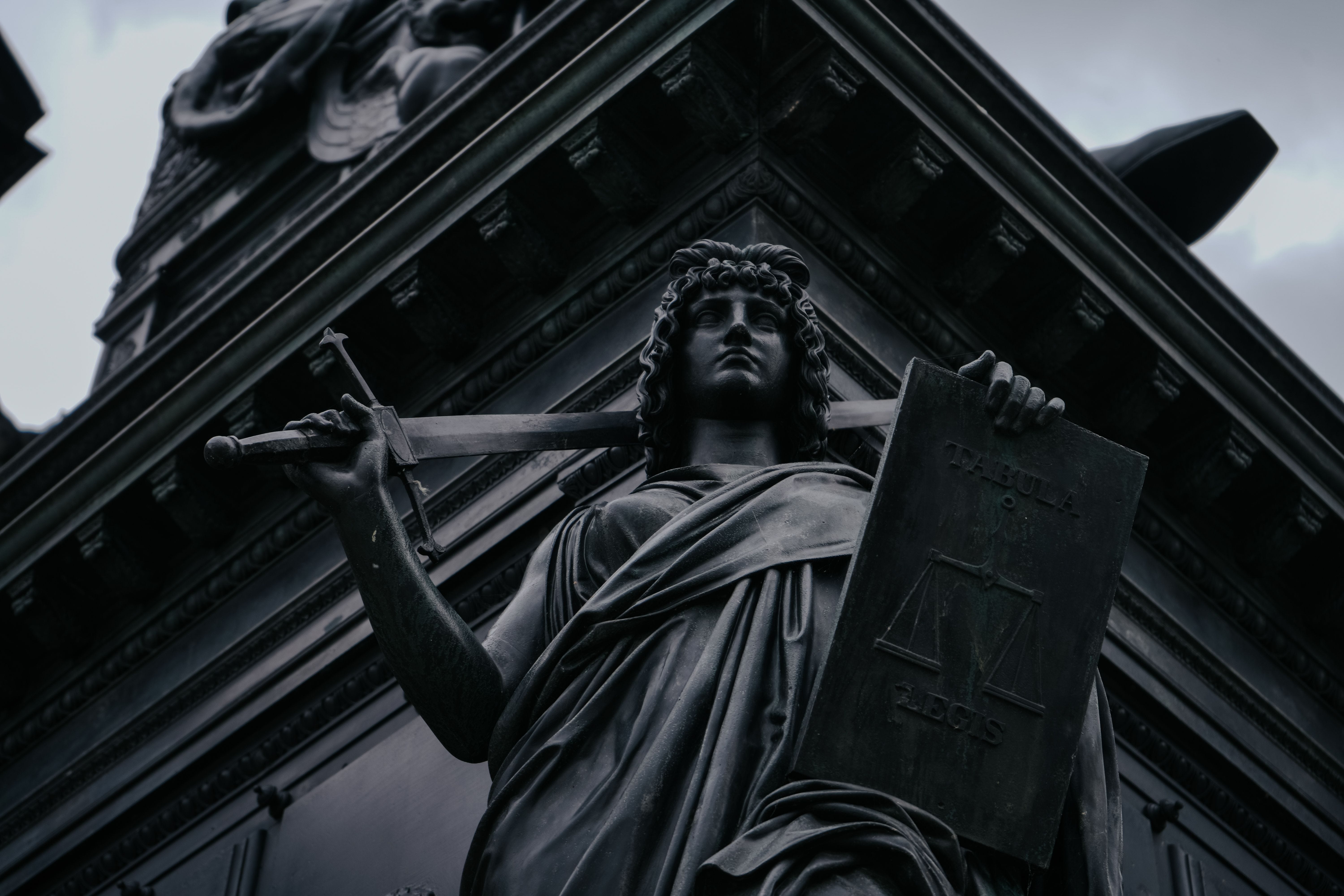
Nobody is saying Karmelo Anthony didn’t do what he was convicted of doing. What I’m saying is that the scales of this justice system have never balanced the same way, depending on who’s holding them and who’s standing underneath.
Rick Chow shot a child in the back. WS Cochran shot an innocent man in the head in open court. Both walked.
The system didn’t fail this week. It performed exactly as designed.
And that’s exactly why we can’t just grieve and move on. Grief without action is just more of the same. The way you change a system that was designed to work this way is to fundamentally redesign it, through laws, through legislation, through the people we put in office to write and pass them.
You change the laws by voting. You change the laws by demanding that the people asking for your vote actually give a damn about Bob White, about Cyrus Carmack-Belton, about John Mendoza JR.
Eighty-five years ago tomorrow, Bob White was shot in the back of the head in a Texas courtroom. The killer paid $500 and went home. The grand jury took two minutes.
We’re still waiting on justice for Bob White, for Tamir Rice, for Trayvon Martin. The least we can do is make sure the next generation doesn’t have to tell the same stories.
Click here to find out what Legislative districts you’re in.
LoneStarLeft is a reader-supported publication. To receive new posts and support my work, consider becoming a free or paid subscriber.
My heart is so sad. An all
White jury. This child never had a chance. He shouldn’t have been charged as an adult. I grieve for both families. No child should be dead, no child should be spending 35 years in prison. The system has failed our children. But most of all the system has failed our black children.
Terrific synopsis of the real history of our system & the pattern that sadly repeats. Until we own up to it, speak out, & vote to change it, it'll keep happening periodically, in some places.
Sadly, from what I'm reading & seeing from credible news sources, it's not only in the US but globally. Most importantly-- it MUST be taught. Thank you, Michelle.