

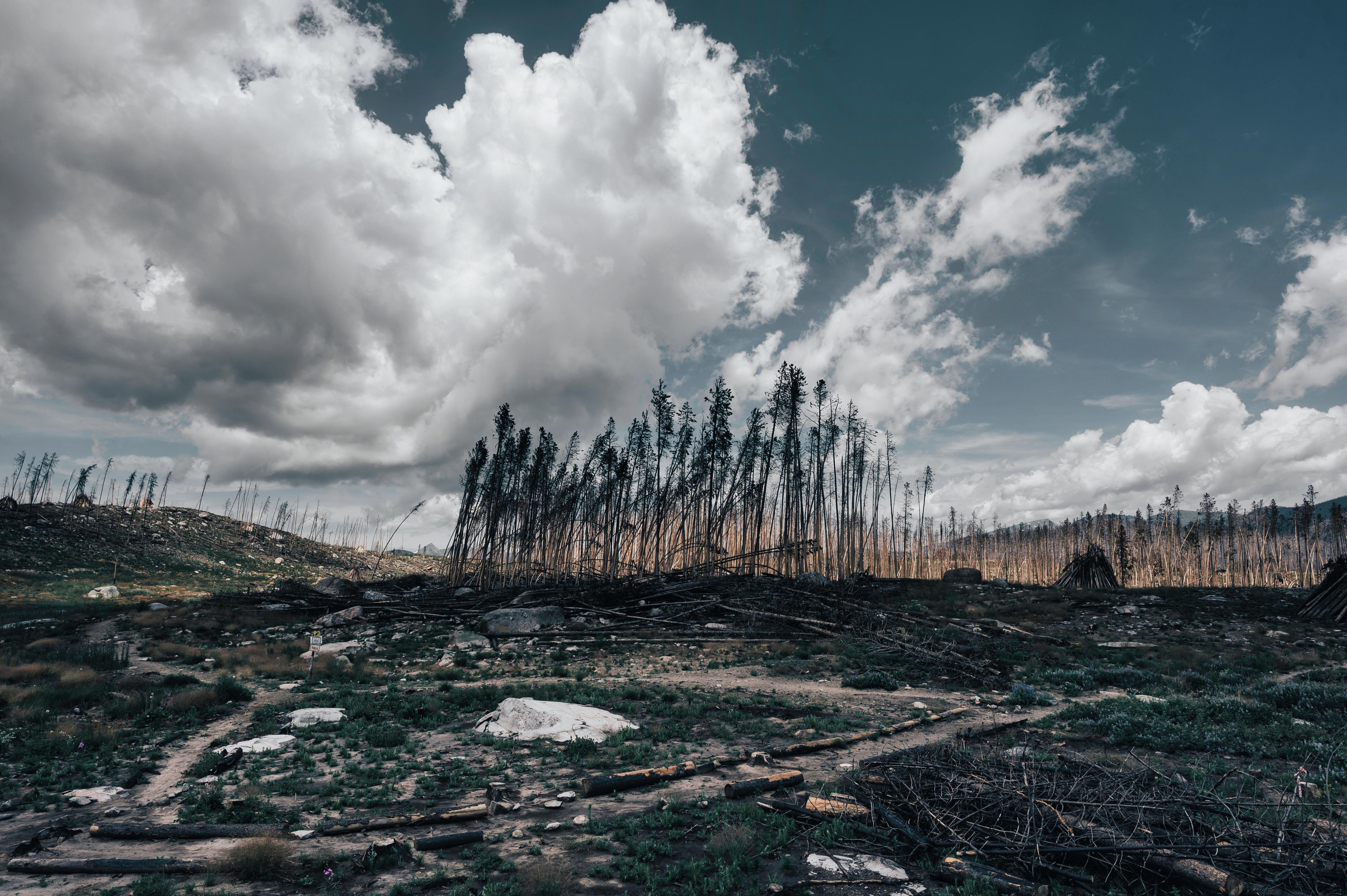
Forecasters and climate agencies (including the NOAA) have been heavily monitoring conditions. Weather models indicate rising ocean temperatures in the tropical Pacific, warning of a potential shift into an intense, potentially record-breaking event. A Super El Niño is becoming increasingly likely. That’s the media term. The scientific term is a “very strong El Niño event as defined by NOAA’s Oceanic Niño Index.”
It’s when the sea surface temperatures in the central and eastern equatorial Pacific Ocean rise at least 2°C (3.6°F) above the long-term average. It causes extreme and widespread global climate anomalies, including severe droughts, unusual storms, and record-breaking temperatures.
Kyle Kulinski talked about it briefly and what we might expect on his show Thursday:
The last time a Super El Niño of this magnitude hit Earth was in 1877. It’s estimated that 50 million people died. Not only from the climate disaster, but also from severe droughts, which led to global crop failures during a time when colonial economic policies were exporting grain to famine-stricken regions. They called it The Great Famine.
And I want to put this 50 million into perspective, because the world’s population back then was only 1.4 billion. That’s 1 in every 25 people on Earth.
Now, scientists are sounding the alarm that we could see weather patterns this year simialar to those in 1877.
El Niño events are a natural feature of the climate system, driven by interactions between ocean temperatures and atmospheric circulation (primarily the trade winds) in the tropical Pacific.
However, global warming increases the frequency and intensity of extreme events and supercharges the consequences.
In 2021, the US Energy Information Administration (EIA) estimated that Texas produced 663.5 million metric tons of carbon dioxide (CO2), 13.5% of the country’s total. This is more than double the carbon emitted by California, the second-largest producer. Texas’s CO2 levels have increased by almost 85% since 1970 across all sectors, including transportation, homes, and businesses.
Texas emits more CO2 than Saudi Arabia, Canada, Mexico, and many other countries.
The State of Texas is disproportionately responsible for climate change, more than any other state in America, and much more than many countries.
And you may be saying to yourself, “Fascism is in the White House now, gas prices are high now. Why should I worry about this El Niño thing? I live by a grocery store. I have bottled water. I’m not in a flood zone. I’ll be fine.”
Texas already experiences more extreme billion-dollar weather events than any other state. In the 1980s and 1990s, Texas averaged fewer than two such damaging events per year. That escalated to 16 in 2023 and 20 in 2024. It is worth noting that NOAA stopped updating these figures under the Trump Administration, citing “evolving priorities, statutory mandates, and staffing changes.”
Climate change helped fuel heavy rains that led to the devastating Hill Country Flood last year, which led to the deaths of 139 people, including 37 children.
Climate change significantly exacerbated the amount of water dumped in Texas during Hurricane Harvey. Some homeowners still haven’t gotten economic relief.

Tornado outbreaks in the Panhandle. 120°+ in the Valley. Strong hurricanes in the Gulf. Flooding in Central Texas. We need to be ready for it all in the coming months.
There’s a looming global fertilizer shortage.
The war in Iran choked off the global fertilizer supply at the worst possible moment. The Strait of Hormuz handles nearly a third of global fertilizer trade, and Iran’s near-shutdown has restricted about 30% of global urea trade, the most widely traded fertilizer on Earth.
The planting season is now, but there is no fertilizer.
A fertilizer shortage during the planting season means lower harvests this fall, leading to higher food prices well into 2027, long after any ceasefire (apparently happening today).
And that lands on top of a Super El Niño threatening drought and crop stress, a six-year drought already gripping the Southern Plains, 2.9 million Texas children already living below a living wage, and Republicans having just cut their food stamps and healthcare.
Maybe some of us will be okay.
Some Americans will weather this better than others. That’s always been true. The Dust Bowl might be a good example. It drove many farming families on a desperate migration in search of work and better living conditions. An estimated 2.5 million people lost their homes and livelihoods.
It’s not random who suffers most when climate disasters hit. In Texas, hydraulic fracturing wells are more than twice as common in areas with over 80% Black and Brown populations. During Hurricane Harvey, nearly 340 tons of extra pollution were released by petrochemical facilities, nearly all of it concentrated within four miles of Manchester, a neighborhood that is 98% Hispanic. Black households earning $50,000-$60,000 tend to live in more polluted neighborhoods than white households earning under $10,000. Race, not income, is the variable.
And then there are the people who don’t have the option to stay at all. Farmers in Central America have experienced multiple droughts since 2014, resulting in crop losses of 70% or more during some harvests. Droughts were likely a key driver of large increases in family migration from Honduras and Guatemala to the United States in 2018 and 2019, and now Trump has “closed the borders.”
30% of migrants in affected areas cited climate-induced lack of food as their reason for leaving. Now that we are not allowing migration into America, countless people could die, likely of famine.
And the ones who close the border, gutted the social safety net, started the war, and spent the last 50 years pretending the climate wasn’t changing, they won’t miss a single meal.
The Republican Party of Texas’s official platform opposes “environmentalism or ‘climate change’ initiatives” and supports abolishing the EPA. And Greg Abbott and Dan Patrick refused to answer a single question about whether burning fossil fuels contributes to climate change.
30 years of single-party control, 30 years of consequences. Texas has been governed entirely by Republicans since 1995. Every statewide office. Both US Senate seats. A supermajority in the legislature. The decisions that left Texas with:
73% of school districts are underfunded.
The worst child uninsured rate in the country.
The highest uninsured rate in the country.
A grid that failed in Winter Storm Uri, killing hundreds.
Child poverty rate has exceeded the national average every year since at least 2010.
2.9 million Texas children live above the poverty line but below a living wage.
Texas has the highest rate of food insecurity in the country.
The 1877 famine didn’t have to kill 50 million people.
The crops failed. The rains didn’t come. That part was nature. But the tens of millions of people who starved while grain ships sailed out of their ports was a choice Colonial governments made. They chose empire over people. They chose profit over survival. And 1 in 25 people on Earth paid for that choice with their lives.
We are standing at a similar crossroads.
The Super El Niño is coming whether we vote or not. The fertilizer shortage is real. The drought is real. The floods are coming. The heat is coming. We cannot stop what is already in motion.
But what happens next is still a choice.
It is a choice whether a Texas governor responds to disasters or poses for photo ops in front of them. It is a choice whether a US Senator votes to gut food stamps during a food crisis or fights to expand them. It is a choice whether we weatherize our grid, fund our schools, insure our children, and treat the people fleeing climate collapse at our border like human beings instead of criminals.
In 2022, 9.6 million registered Texas voters did not cast a ballot. Nine point six million. That is not a red state. That is a state that has been handed, year after year, to the people who caused all of this, by the silence of the people who have to live with it.
In 2026, Greg Abbott is on the ballot. His name is next to Gina Hinojosa’s. John Cornyn (or maybe Ken Paxton), who has sat in the United States Senate since 2002 and voted for every single policy described in this article, is on the ballot next to James Talarico. Your state rep is on the ballot. Your school board is on the ballot.
The people who won’t miss a meal have already made their choices. They chose oil companies over schoolchildren. They chose war profits over grocery bills. They chose to let people freeze to death and then undercounted the bodies.
Now it’s our turn.
The 1877 famine is a history lesson. What happens in Texas in 2026 is not history yet. It is still being written. And the question is not whether the storm is coming.
The question is who is in charge when we’re left to deal with the aftermath.
May 22, 2026: Last day of early voting (Democratic primary runoff elections)
May 26, 2026: Last day to receive ballot by mail (Democratic primary runoff elections)
May 26, 2026: Election day! (Democratic primary runoff elections)
Click here to find out what Legislative districts you’re in.
LoneStarLeft is a reader-supported publication. To receive new posts and support my work, consider becoming a free or paid subscriber.
It is going to be awful. The farmers have been talking about this all year.
Some say we speak or write too much doom and gloom, and you are correct that whatever happens in the next couple of year cannot totally be stopped. We have to look for what we can do. Live as though our lives depends on it, because they do. Let's work together to build on what we have with what we can create and BY ALL MEANS DO NOT RE-ELECT THOSE THAT CAUSED PROBLEMS RATHER THAN SOLUTIONS.