


In 1973, OPEC began an oil embargo on the United States and other countries in retaliation for America’s military support for Israel during the Yom Kippur War. That year, Dallas residents were furious over 40¢ gas. The city council even discussed 50mph speed limits and banning Sunday driving.
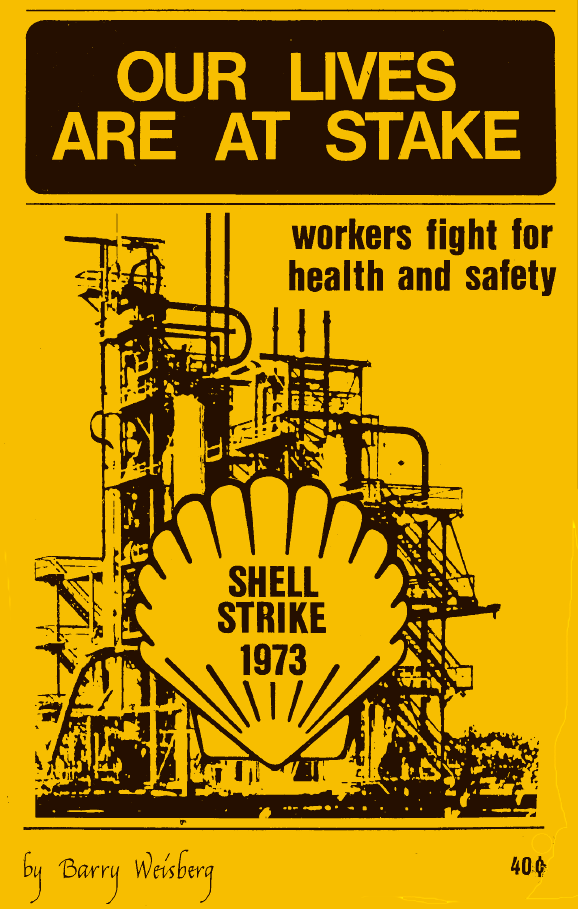
Meanwhile, a few hundred miles south, in what was called the first environmental strike in America, 1,800 members of the Oil, Chemical and Atomic Workers at Shell Oil’s Deer Park plant struck for the right to access records to help monitor the workplace environment.
Shell Oil Company moved its headquarters from New York to Houston in 1970, settling into the newly built One Shell Plaza, so by the time of the 1973 strike, Shell’s corporate HQ had been sitting in Texas for three years already.
What was interesting, when researching this, was how many old news sources there were about the oil embargo, but how few I could find about this strike, which included more than 4,000 Shell workers nationwide and took place at the exact same time as the embargo. While the “first environmental strike in America” did get some coverage, it was obscure because, in America, there has only ever been one narrative.
The embargo.
OPEC’s Arab members shut off the tap, prices at the pump roughly quadrupled within months, and the federal government responded by capping prices and rationing. Odd-even license plate days. Gas stations running dry by noon. Nixon lowered the national speed limit to 55 and called it “Project Independence.”
None of that solved anything. But it gave Americans a target for their anger. OPEC. It was “the Arabs.” It was some vague, foreign, cartel-shaped villain a comfortable distance away. Nobody was putting “we’re mad too” bumper stickers on their car about Shell, or the fact that the companies actually setting American gas prices were, at that very moment, headquartered a short drive from where the bumper stickers were being sold. The anger flowed outward, toward a target 7,000 miles away, instead of inward, toward the companies that had spent the last decade consolidating market power that makes a supply shock this painful in the first place.
That’s the emotional shape of 1973’s most famous story. Scarcity, fear, and a villain conveniently located somewhere else.
It’s also, as it turns out, not the only story Texas produced that year.
Shell, Houston, and the health-and-safety strike.
Shell was at One Shell Plaza in downtown Houston. Fully a Texas company by address, tax bill, and skyline presence, long before this strike ever started.
In January of that year, the Oil, Chemical and Atomic Workers pulled more than 4,000 members off the job at five refineries and three chemical plants across the country. Shell wouldn’t bargain over health and safety, so the union walked and called it what it was: “The first national strike of its kind in American history,” built around the idea that workers had a right to know what was slowly killing them on the job.
Periodic medical exams. Access to mortality data. A seat at the table when it came to what, exactly, they were being exposed to for eight, ten, twelve hours a day. That’s it. Just the right to see the numbers the company already had.
Shell said no. And when the union’s national unity started to crack under the weight of that no, it cracked in Texas. Shell found its opening at the Deer Park plant, just outside Houston, and cut a separate, weaker deal there, one with non-binding safety language that let the company walk away having conceded almost nothing. The rest of the national strike collapsed under it. By May, a broke union settled for a fraction of what it went on strike for in January.
Texas was where the company found the seam, and where the seam gave way first.
Have we learned by now?
There’s always a version that comes from our government. It’s the same version that comes from these big oil companies, or these big data companies, or whatever is killing us the most at the moment. Prices. Patriotism. Supply and demand. Forces beyond anyone’s control. And there’s the version it keeps for itself, in memos and closed-door negotiations, where it already has the numbers and has already decided you don’t get to see them.
In 1973, while under an oil embargo, 4,000 oil workers went on strike. It barely made it out of the trade press. And why were they striking? For the mortality database Shell wouldn’t hand over to its own workers. Decades later, it’s climate data.
The Senate Budget Committee’s investigation into Big Oil’s climate deception found the same instinct. Internal Shell documents from 2013 to 2018 show the company running public ad campaigns touting net-zero emissions goals, while telling its own employees and lobbyists, privately, not to imply that net-zero was actually a target. Exxon’s internal records showed the same double game. So did BP’s, when it came to marketing natural gas as clean.
Say one thing to the public. Know another thing internally.
Exxon is headquartered in Spring. Shell and BP are headquartered in Houston. Fifty years after Deer Park, the corporate return addresses haven’t moved. And ever since then, ever since the discovery of Spindletop, Texas politicians have been doing these companies favors.
From the lungs to the atmosphere.
In 1973, the ask was about workplace air. Periodic exams, mortality data, a seat at the table. Shell said no.
Fifty years later, the ask is about the planet’s air. Same refusal. Same instinct to keep the internal numbers internal, right up until they can’t anymore.
The UN’s latest report puts us at 1.5°C, the line the world drew for itself in Paris, which is going to be crossed within the next few years. The best-case scenario now peaks around 1.8°C, and that’s the good outcome. There are no good outcomes above 1.5°C, the report says, in case anyone was still confused about the stakes. Under actual current policy, the world is on track for 2.8°C by 2100.
It’s the same “we told you it was fine” dynamic, just run at planetary scale and in slow motion. Deer Park workers wanted to know what they were breathing before it killed them. The rest of us are finding out what we’ve been breathing after the fact, from a UN report instead of a mortality database, decades too late to bargain over it.
Texas produces more CO2 than any other state in the country, 669.9 million metric tons in 2023 alone, more than double the next-largest industrial contributor. The company that fought its own workers over the right to see the numbers is headquartered in the state generating more of the thing those numbers were trying to prevent than anywhere else in America.
This is about Texas.
It’s a story about who gets told, and who gets to find out later.
In Houston’s Fifth Ward and Kashmere Gardens, historically Black neighborhoods, state health investigators confirmed a childhood cancer cluster near a former rail yard, with lymphoblastic leukemia rates nearly five times the baseline in the census tract closest to the contamination.
During Hurricane Harvey, 93 percent of all known toxic emissions released in Harris County came from within a four-mile radius of Manchester, a predominantly Hispanic neighborhood that makes up less than 5 percent of the county’s geography.
And out in the Eagle Ford, where the fracking boom hit hardest, wastewater disposal wells were found to be twice as common in neighborhoods that were 80% or more Black and Hispanic than in majority-white ones.
It’s the same mechanism in the neighborhoods closest to the refineries whose headquarters this whole piece has been circling. Deer Park workers had to strike just to see the numbers Shell already had on them. Manchester residents just got the smoke.
Fifty years on, the throughline is that the state hosting these headquarters has spent half a century letting the companies decide what Texans get to know, and when.
The villain had a Houston zip code the whole time.
It’s Labor Day. Fifty-three years and a couple of months since a bunch of guys in Deer Park walked off the job because Shell wouldn’t tell them what they were breathing, and fifty-three years since Dallas drivers were slapping “we’re mad too” stickers on their bumpers over 40-cent gas.
Both were mad about the same year. Neither was mad at the same target.
The anger in 1973 flew straight over Houston and landed on OPEC, on “the Arabs,” seven thousand miles away, who at least had the decency to be foreign. Nobody put a bumper sticker on their car about the big oil company that had the mortality data and wouldn’t hand it over.
The company that fought its own workers over the right to see the numbers in 1973 is still headquartered in Houston. So is BP. Exxon’s just up the road now. The internal memos changed from mortality data to net-zero targets, but the zip codes never moved, and neither did the instinct. Say one thing in public, know another thing in private, let the public version do the work of protecting the internal one.
Texas Republicans have run this state uninterrupted since 1995. Thirty-one years of letting the companies decide what Texans get to know and when, whether that’s a refinery worker in Deer Park or a family in Manchester finding out after the flood what was already in their soil. Thirty-one years of a legislature that meets every session and finds new ways to make it easier for the industry and harder for everyone standing downwind of it.
And before anyone emails me, it’s true that the Democrats in Texas in the 1970s and 1980s were all pro-fossil fuel, but that era is gone. The GOP now owns that title, and under their reign they’ve only made it worse.
This November, Greg Abbott is on the ballot next to Gina Hinojosa. Paxton is on the ballot next to James Talarico. Your Congressperson is on the ballot. Your state rep is on the ballot. Your school board is on the ballot.
The anger was always aimed at the wrong villain, on schedule, by design. That’s not an accident either. Fifty-three years is long enough to notice the pattern. In November, vote for people who recognize who the villains are, know we’re in a climate emergency, and are ready to take it seriously.
57 days until the November election!
Did you know you can find links to all the previous Meet the Candidate articles on these lists?:
Click here to find out what Legislative districts you’re in.
LoneStarLeft is a reader-supported publication. To receive new posts and support my work, consider becoming a free or paid subscriber.
Follow me on Facebook, TikTok, Threads, Bluesky, YouTube, and Instagram. Or join my Facebook Group.
Another little example of this is the development of the pesticide DBCP, which Shell started selling in the early 1960s. They knew it was hazardous to workers using it but continued selling it for years, especially to plantations in Central America and elsewhere. Tens of thousands of men were sterilized by working with this pesticide. Shell eventually settled with some of these men, continuing to deny liability of course.
In 2021, Exxon locked out workers at its Beaumont refinery and refused to negotiate a new contract with the United Steelworkers. BP is now using the same hard-ball tactic at their refinery in Indiana where 800 workers have been locked out since March. The refinery is being run by lower paid contract workers. BP says they need cost cutting measures including eliminating jobs but their profits have soared, more than double than the same period last year.