

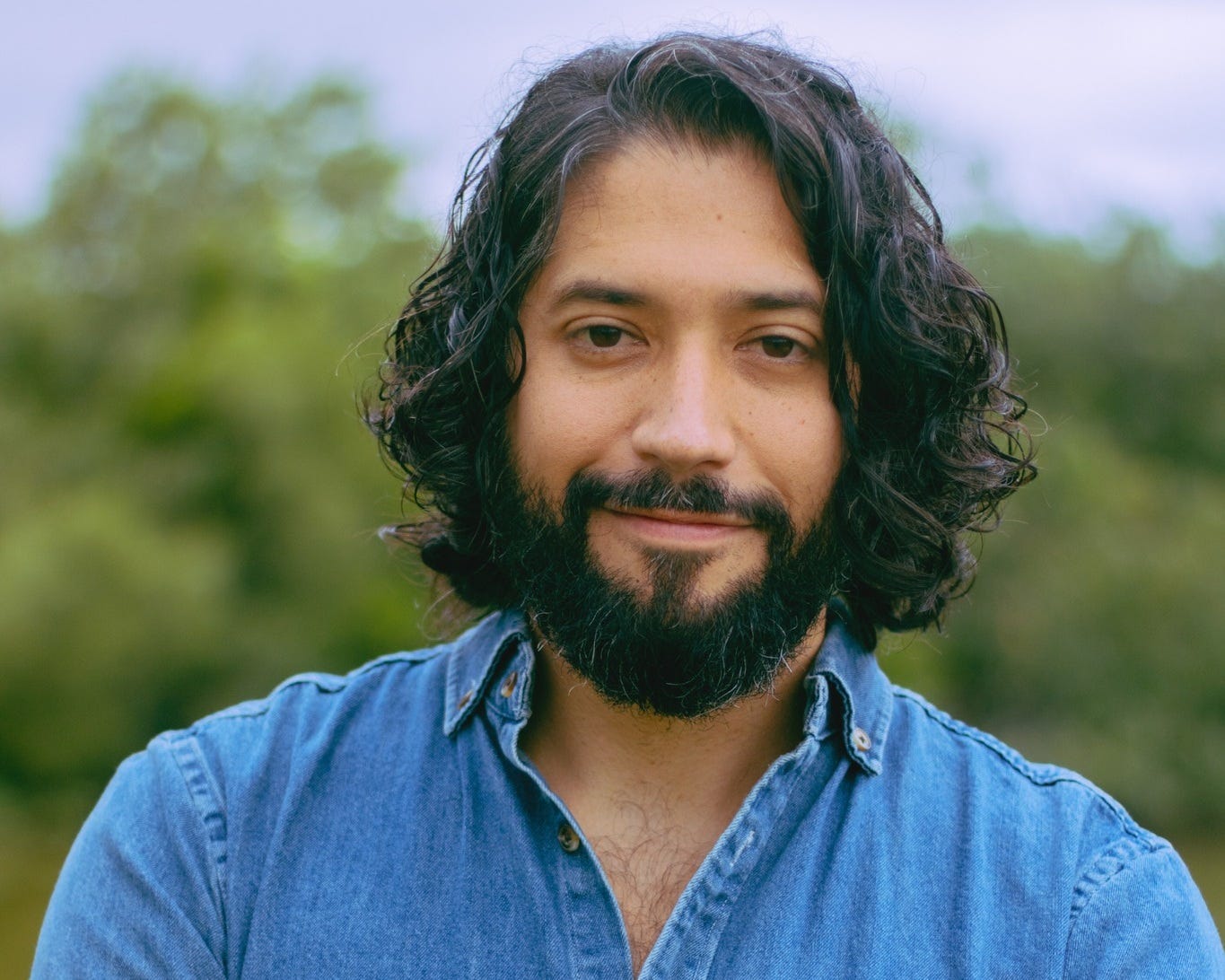
While I usually like to save the bonus questions I asked the candidates for the end of the article, the answer that Etienne Rosas gave was fantastic, I thought it would be a great way to start this article out:
Bonus Question: What does being a Democrat mean to you in 2026?
“Many corporate Democrats have tried to sideline or dismiss Democratic Socialists or progressives challenging them in the Democratic Party, even claiming we should start our own party. They have it backwards. We are taking the Democratic Party back to its working-class, community-focused roots, those that expanded Medicare, Social Security, unions, and gave us the largest middle class in history. This is what Franklin D. Roosevelt and New Deal Democrats stood for in their efforts to lift the country from the depths of the Great Depression. It is what Democrats must resolutely stand for once again to lift us from the depths of Trumpism” - Etienne Rosas
The reason this resonated with me, and likely with many progressive readers in Texas, is that it cuts straight to the truth of our political memory, and the Democratic Party’s most transformative moments came when it unapologetically stood with working people.
The principles of the Texas Progressive Caucus are explicitly rooted in Franklin D. Roosevelt’s Second Bill of Rights, the idea that freedom means the right to a job with dignity, a living wage, healthcare, education, housing, and security in old age. FDR is often remembered as the most progressive president in American history because he understood that democracy collapses when economic power is allowed to run unchecked over human lives.
That tradition matters in Texas, where working-class people of every race and background have been systematically excluded from political power while being told to accept scraps instead. When Rosas talks about “taking the Democratic Party back,” he’s naming a concrete political lineage. And in a moment defined by rising authoritarianism, corporate capture, and economic precarity, it’s precisely the grounded, working-class clarity Texas Democrats need again.
And the juxtaposition is incumbent Vicente Gonzalez (D), one of the more conservative, corporate-friendly Democrats in the House.
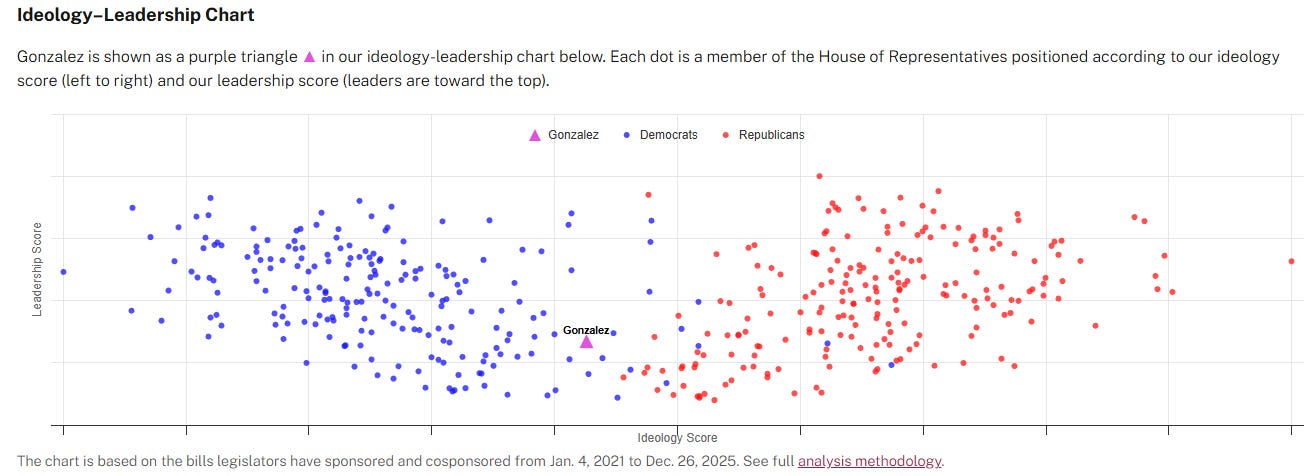
TX34 is a working-class South Texas district, overwhelmingly Latino, coastal, and border-rooted.
This is a district of service workers, port and logistics workers, teachers, nurses, farmworkers, public employees, and small-business families. These are people who feel rising housing costs, healthcare gaps, disaster vulnerability, and low wages immediately and personally. At the same time, TX34 sits at the center of billionaire-driven development and corporate mega-projects that promise “jobs” while concentrating power, profits, and political influence at the top.
When representation bends toward donors and corporate interests, working families are left to absorb the costs, environmental risks, infrastructure strain, stagnant pay, and communities treated as expendable. This district doesn’t need a caretaker who manages decline or a politician who measures success by ribbon cuttings and fundraising totals.
It needs someone who understands that economic justice, environmental protection, healthcare access, and strong labor standards are survival issues. TX34 deserves a representative who works for the people who live and labor here, not the billionaires who see South Texas as a balance sheet.
Vicente Gonzalez does not have a history of voting to protect working people. His history reflects voting time and time again to protect corporate interests. You can find a record of all of his key votes here.
What policy positions does Etienne Rosas have that will uplift working families?
Below are some questions I asked Rosas and his answers.
Q: Should Congress pass a federal $17/hour minimum wage, indexed to inflation?
Yes. However, I’d go further and push for a gradual raise to $20/hr indexed to inflation, which is well below $24/hr - where the minimum wage would be if it had kept up with productivity growth since 1968.
Q: Do you support universal, publicly funded healthcare (i.e., Medicare for All or a similar single-payer system)?
Yes, the federal government has a responsibility to promote a healthy population by guaranteeing healthcare as a human right. I support a Medicare for All system - a single, national, publicly funded program that covers every American from birth to death, with no out-of-pocket fees. First steps include expanding Medicare eligibility, eliminating medical debt, and capping prescription drug prices.
Q: Do you support federal student debt cancellation and tuition-free public college?
Yes. For the first time in modern history, younger generations are financially worse off than their parents despite having attained higher levels of education. Predatory loans and inflated costs in education have dampened the economic potential and dynamism of our youth, leading to a net loss for society at large. I support federal student debt cancellation as a step to relieve that harm and stimulate the broader economy. Beyond cancellation of debt, I support structural change to expand access to higher education - that means tuition-free college and university, including community colleges and trade schools. Like K-12 education, higher education is a public good and should be treated as such.
Q: Do you support a federal jobs guarantee and large-scale public investment in housing, transit, and care infrastructure?
Yes. A federal jobs guarantee with large-scale public investments would create millions of union jobs, reductions in inequality, and major boosts in benefits that matter most to everyday Americans - lower rents, cleaner air, affordable cities, improved healthcare and childcare, and a floor for unemployment. Less than a century ago, these kinds of policies delivered the closest version of the “American Dream” that built the American middle class. Now, they are more necessary than ever.
At its core, this race is about representation, not ideology.
It’s about who gets heard in Washington, who gets protected when policy is written, and who is expected to absorb the risk when things go wrong. In TX34, that risk falls on working families. Higher costs, fragile healthcare access, environmental exposure, and public systems stretched thin. Meanwhile, the people with the most money and influence stay insulated.
When leadership listens upward rather than outward, as Gonzalez has been doing, communities are left to manage the fallout on their own. Real representation doesn’t ask people to accept sacrifice as inevitable. It fights to make sure they’re not the ones always paying the price.
We also don’t have to pretend this is an open question anymore. Conservatism, as it’s been practiced in this country, has meant shifting risk downward, privatizing profit while working people absorb the cost. Deregulation, austerity, union-busting, and tax policy favoring the wealthy have produced exactly what we see now. Higher costs, weaker public institutions, precarious work, and a political culture that feeds on resentment rather than solutions. No version of that ideology builds a stable, multiracial working-class democracy, and it has no place inside a Democratic Party that claims to stand for dignity, security, and freedom.
Etienne Rosas highlights economic justice as his top platform issue.
Etienne Rosas puts economic justice at the center of his campaign. His platform is blunt; most families are living paycheck to paycheck, and one emergency can spiral into financial ruin. He frames that instability as a feature of our current political economy, not a personal failure. And he’s equally clear about what it will take to reverse it. An “economic bill of rights” approach that treats housing, healthcare, education, and dignified work as the baseline for freedom. From his site:
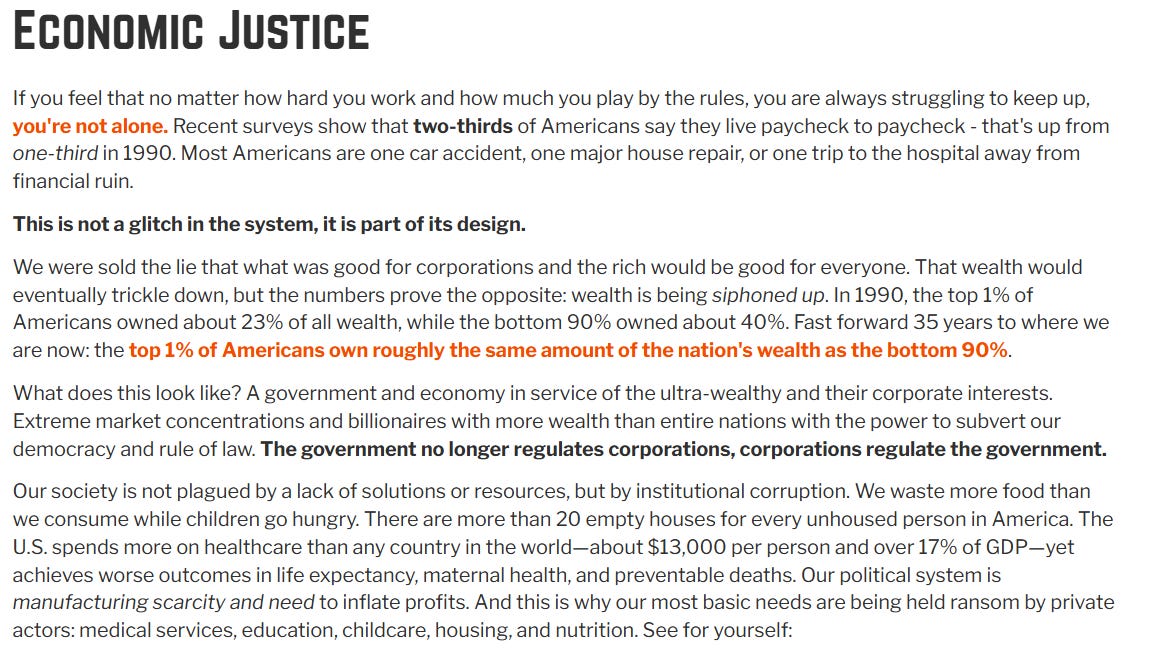
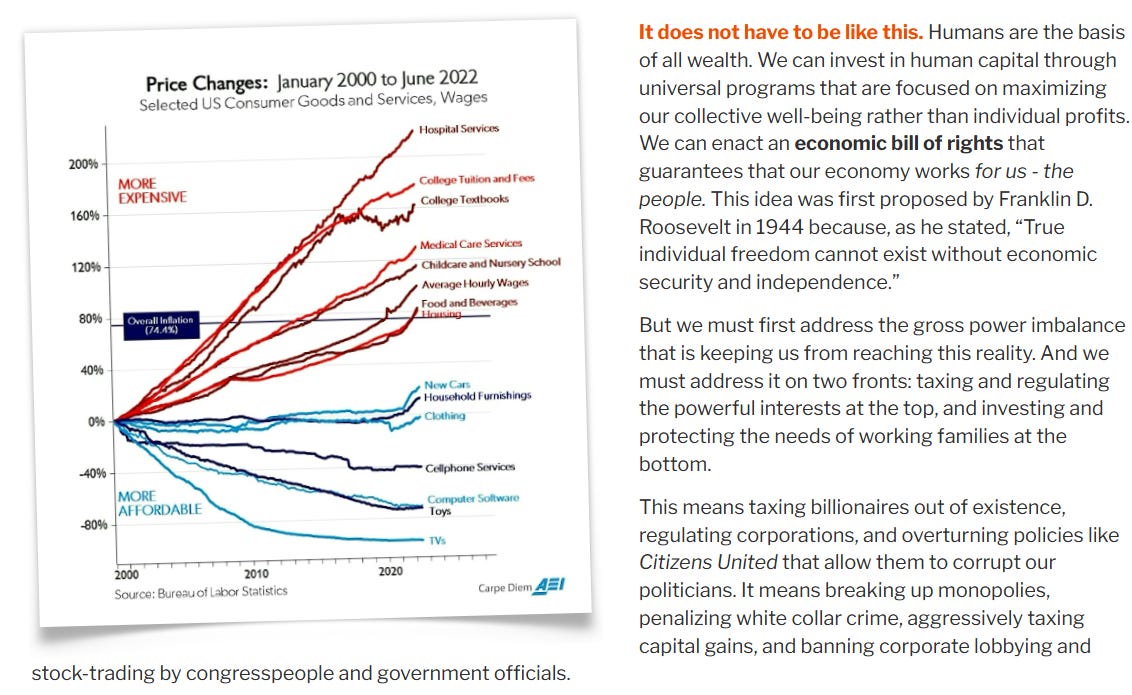
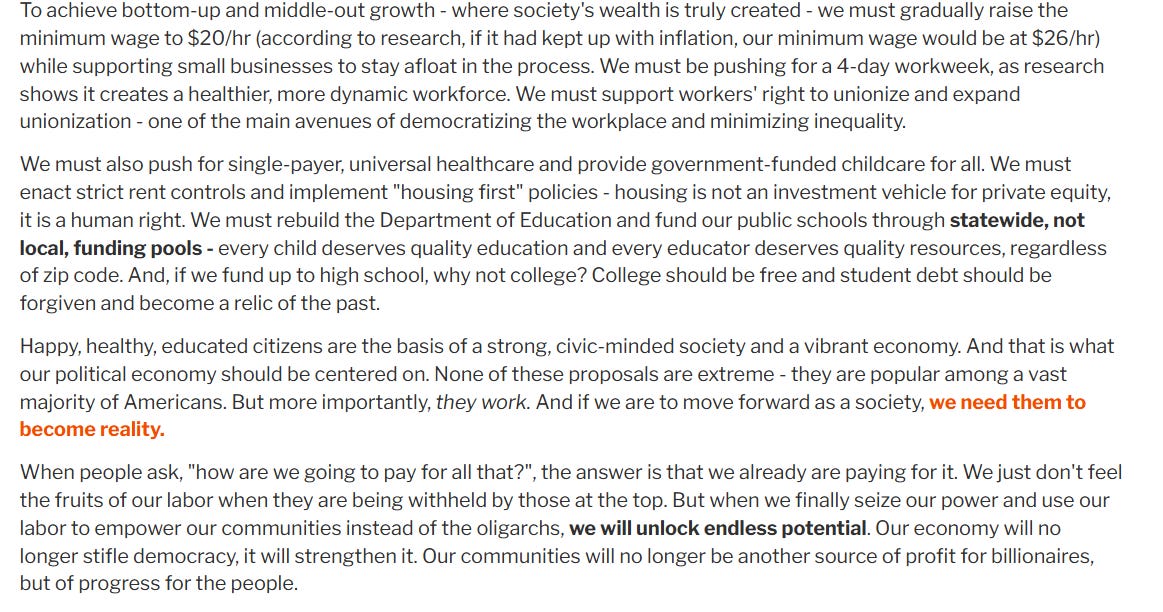
In fact, on Rosas’ website, he covers all of his platform issues in depth, including healthcare, immigration, climate, democracy, public safety, access to opportunity, and foreign relations. He leaves no room for you to question where he stands or what he believes (more candidates should be this thorough).
Here are some other questions I asked that I believe will show a big difference between him and the incumbent.
Q: Do you support a Green New Deal or similar large-scale federal climate action plan?
Yes. I support a Green New Deal approach that massively expands renewable energy, upgrades our electrical grid, invests in energy-efficient housing and infrastructure, creates union jobs in clean energy and environmental remediation, and prioritizes communities hit hardest by industrial pollution and climate disasters. Clean energy is the future, and we must ensure it is built by and for the people.
Q: Would you support major tax reform, including raising taxes on billionaires and large corporations?
Absolutely. The enormous concentration of wealth at the top has not only led to the dispossession of our workers and communities, but to the undermining of our democratic institutions amid unprecedented levels of corruption. Every billionaire is evidence of policy failure. And if it is policy that has enabled this absurd degree of inequality, it is policy that can mitigate it - and it begins with major tax reform. Progressive taxation is necessary to make our economy - and our government - work for all of us, not just for the billionaires.
Q: Do you support ending U.S. military aid to countries with ongoing human rights abuses, including Israel and Egypt?
Yes. The US must become a consistent leader in upholding international law and deterring harm to civilians. This begins by cutting off military aid to egregious, well-documented human rights violators such as Israel and Egypt. We must fully enforce and strengthen the Leahy Laws and condition security assistance on clear, verifiable compliance with human rights standards.
Q: Should Congress ban corporate PAC money and implement public campaign financing?
Yes. I support banning corporate PAC contributions and closing loopholes that enable “dark money” and pay-to-play politics. Corporate PACs have allowed wealthy and special interests to translate money into political access, drowning out the voices of communities and workers. We must also implement public campaign financing and systems like small-donor matching and rank-choice voting.
Lone Star Left exists to challenge power, not flatter it, and that includes being honest about where the Democratic Party falls short.
I’m endorsing Etienne Rosas because he is clear about who he works for. His politics are rooted in the lived reality of working families, not donor comfort or Washington incentives. He isn’t asking South Texans to accept less, as the incumbent has done for years. And he is offering representation that treats dignity, security, and economic justice as non-negotiable. In a district like TX34, that clarity isn’t radical. It’s necessary.
If you live in TX34, this race matters, and you can help shape its outcome. Learn more about Etienne Rosas’ platform.
Find out more about Etienne Rosas on his website, Facebook, Instagram, TikTok, or Twitter.
If you’re able, consider volunteering. There are nine weeks left until the primary election, and he’ll need plenty of door-knockers and phone callers to help him go up against a well-funded incumbent.
And if you can afford it, even $5, please consider donating to his campaign. (And tonight happens to be the quarter-deadline.)
Most importantly, make a plan to vote. The primary election is March 3.
Representation only works if we claim it. TX34 deserves a representative who fights for the people who live and labor there, and that’s why Lone Star Left proudly endorses Etienne Rosas for Congress.
February 2, 2026: Last Day to Register to Vote
February 17, 2026: First Day to Early Vote
March 3, 2026: Primary Election
Click here to find out what Legislative districts you’re in.
LoneStarLeft is a reader-supported publication. To receive new posts and support my work, consider becoming a free or paid subscriber.
Follow me on Facebook, TikTok, Threads, YouTube, and Instagram.
Happy new year 🎊🎈🎆 Michelle.
Thanks for another informative article and introducing a good progressive candidate to us. As advised, I made a modest contribution to his campaign and selected the monthly recurring option.
Please encourage such progressive candidates to also invest in text banking, as that scales up relatively economically. People tend to ignore calls from unknown numbers but look at text messages from them even if they don’t respond. The campaigns can then attract and leverage volunteers from all over the country. I had volunteered for Governor Newsom’s campaign to garner support for Proposition 50 and it worked quite well.
Thank you, Michelle!!! I shared this on Bsky hours ago, but forgot to tell you! Happy New Year!!!