

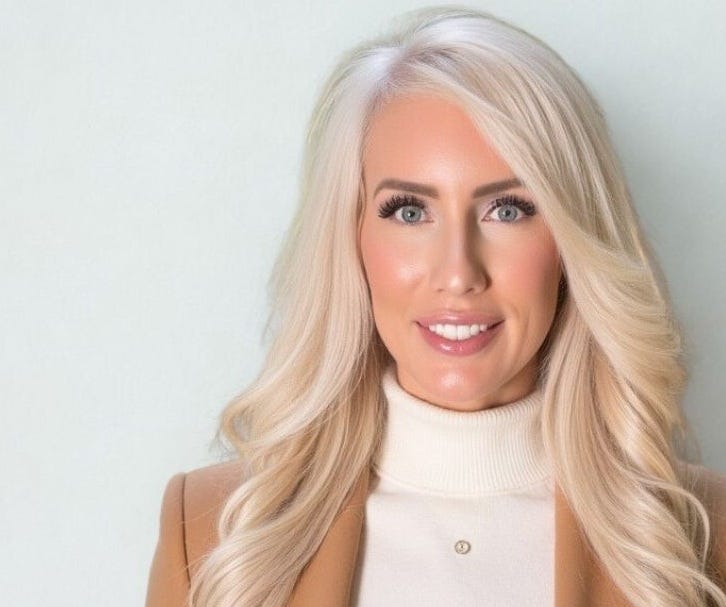
This series is called Meet The Candidates. Over the next nine months, I’ll spotlight a handful of Democratic races each month, mainly in the Legislature and in Congress. These aren’t endorsements. They’re introductions, a way to understand who’s running, the districts they hope to represent, and what’s at stake for people across Texas.
Who is Brittany Black?
Brittany Black brands herself as a “Triple-A” candidate, which stands for accountability, affordability, and action. But underneath the slogan is a pretty specific worldview. A government should function like a system that works, and right now, she thinks it doesn’t. An engineer by career and a business owner by trade, she talks about politics the way someone talks about infrastructure, inputs, outputs, planning, and failure points. Closed neighborhood schools, rising housing costs in Collin County, traffic bottlenecks, power outages, and tax transparency all land in the same bucket for her.
Black leans hard into a “people over politics” message and repeatedly describes the divide less as left vs. right and more as working families vs. a system that serves insiders. She’s positioning herself as a non-politician candidate, someone who moved to McKinney, built a life there, noticed the planning failures, and decided the Legislature should function more like a problem-solving body than a culture-war arena. Whether voters buy that framing will depend on how much they want a technician in a political job, but it’s clearly the lane she’s running in.
The district.
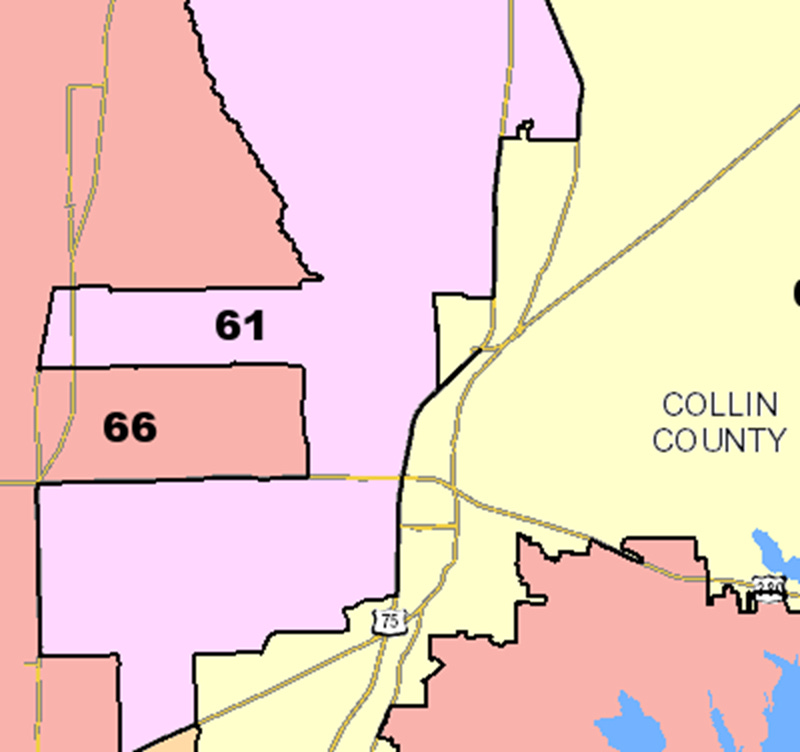
HD61 is one of those suburban North Texas seats that still reads “red” on paper, but not deep red. Demographically, it’s basically a 50/50 Anglo vs. non-Anglo district with a very large Asian community (about 23% of the total population) and a combined Black+Hispanic share of around 24%. The district is also highly educated (about 61% of adults 25+ have a bachelor’s degree or higher) and high-income, with very high housing costs (average home value is roughly $531K, and average rent is around $2,148).
In 2024, Trump took HD61 55.9% to 41.3%, and Ted Cruz won 53.3% to 44.7%. At the state House level, the Democrat (Adams) received 40.4%, while the Republican (Richardson) received 59.6%. That’s a real gap. The “good” news is that district turnout is high (71.7%), which means there’s a stable electorate and many persuadable, habit-voting suburban voters who a credible case can move.
So what’s it going to take to flip this district? First, Democrats have to run a candidate who fits the district’s self-image. Competent, pragmatic, and relentlessly local. This is a place where “culture war vs. culture war” is a trap. The message that travels is that your taxes are high, your schools are under strain, housing is out of reach for your kids, traffic is a mess, and the state keeps playing games while the district pays the bill. In a district with lots of families (average household size 3.1; a majority have kids) and a large share of commuters/remote workers (about 26.6% work from home), school quality and infrastructure are a daily part of life.
Second, Democrats have to organize as if the electorate is diverse. The Asian share is big enough that you don’t “add it on” at the end; you build with it from day one, with language access where needed and real community connectors.
Third, because this district already votes at high rates, the path is less about a miracle turnout surge and more about persuading soft Rs/independents plus consolidating and maximizing Democratic performance among non-Anglo voters, especially in the high-propensity, high-education slice. If Dems can’t build trust in their competence and school/infrastructure outcomes, they won’t win this seat.
Democrats are going to need targeted persuasion, year-round community presence, and a campaign that sounds like it understands Collin County life, not Twitter politics.
The incumbent.
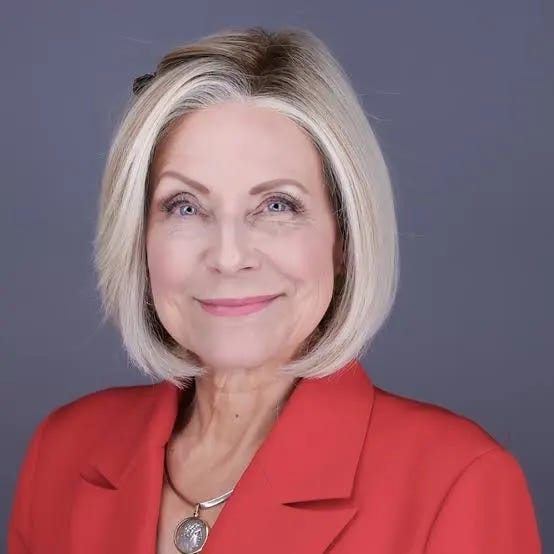
My first indication that Keresa Richardson was totally off her rocker was the last election cycle, when she signed on to every single one of the far-right Republican pledges in the election cycle. Texit. Abolish abortion. Eliminate Democratic chairs. Mass deportation. She was the only Republican last cycle to sign EVERY single far-right pledge. She’s so far-right on the political spectrum, I couldn’t tell you whether she praises Jesus or hails Hitler first on a Sunday morning.
Brittany Black does have a primary competitor.
In Brittany Black’s own words.
Below are some questions I asked Black, based on previous reader polls, along with her answers.
Q: Do you support a statewide minimum wage increase to at least $15/hour?
Yes. Texas workers deserve wages that reflect the actual cost of living. At $7.25, our minimum wage hasn’t kept pace with inflation for over 15 years. As a business owner, I know that when working families have more purchasing power, local economies thrive. A $15 minimum wage is overdue.
Q: Should Texas end tax subsidies and abatements for large corporations?
Yes, with reforms prioritizing accountability and community benefit. Texas hands out billions in corporate subsidies with little accountability.
Any tax subsidy should require measurable job creation, clawback provisions, and full transparency. I’m not opposed to strategic investments, but I oppose corporate welfare that enriches executives while schools go underfunded and property taxes spike for homeowners.
Q: Do you oppose school vouchers and efforts to privatize public education?
Absolutely. School vouchers are a direct attack on public education.
Our current representative (and likely opponent) voted to close 3 elementary neighborhood schools while profiting from construction contracts. Voucher schemes do the same thing at scale—draining resources from public schools, harming rural and low-income communities without private school alternatives, and eliminating accountability.
I’m one of the first in my family to earn college degrees because I had access to quality public education. Every child deserves that foundation. Rather than vouchers that primarily benefit wealthy families, we should fully fund public schools and pay teachers professional wages.
Q: Should Texas guarantee free school meals to all K–12 students, regardless of income?
Yes. No child should go hungry.
Universal free meals work—studies have shown kids perform better academically, and attendance improves. Hunger is a learning disability. A child who comes to school hungry can’t focus on learning.
Universal meals eliminate stigma, simplify administration, reduce costs through economies of scale, and ensure every child has the nutrition they need to succeed. In the wealthiest state in the country, feeding schoolchildren shouldn’t be controversial.
Q: Would you support redirecting state subsidies from fossil fuels to fund community-owned solar, wind, and battery projects in low-income and rural areas?
Yes. Energy independence and economic development shouldn’t be mutually exclusive.
Community-owned renewable projects create local jobs that can’t be outsourced, reduce energy costs, increase grid resilience, and position Texas as a clean energy leader. Rural and low-income communities have borne environmental costs without economic benefits—community ownership flips that script.
February 2021 taught us that our grid has serious vulnerabilities, and now there is the addition of data centers. Distributed renewable energy with battery storage makes us more resilient and economically competitive.
Bonus Question: What does being a Democrat mean to you in 2026?
Being a Democrat in 2026 means fighting for a future where hard work leads to security, public institutions serve the public, and everyone has a genuine opportunity regardless of their starting point. And there may not be a second chance, so we have to put everything into this fight.
It means understanding that government can solve real problems through competent policy execution. As an engineer, I know complex systems work beautifully when designed with end-users in mind—that’s what Democratic governance should be.
For me personally, it’s honoring working-class values: look out for neighbors, full-time work shouldn’t mean poverty, everyone deserves dignity, and when someone’s struggling, you help them up. It’s also understanding that no one is coming to save us, so we need to step up and be the change and fight for our future.
HD61 is a Republican-leaning suburban seat full of high-propensity voters who prioritize competence and stability over ideology.
Democrats don’t win here by accident, and they definitely don’t win here by yelling louder online than the other side.
What Brittany Black is trying to do is run as a systems-fixer in a district that actually cares about systems. Whether that works will depend less on whether voters believe she understands their day-to-day reality better than the person already in office.
So this race isn’t just about party labels. It’s a test of whether a technocratic, locally grounded Democrat can persuade a suburban electorate that competence matters more than tribal alignment, and whether a district built on rapid growth is ready to vote as it knows it.
You can learn more about Brittany Black at her website, Facebook, and Instagram.
February 17, 2026: First Day to Early Vote
March 3, 2026: Primary Election
Click here to find out what Legislative districts you’re in.
LoneStarLeft is a reader-supported publication. To receive new posts and support my work, consider becoming a free or paid subscriber.
Follow me on Facebook, TikTok, Threads, YouTube, and Instagram.
Thank you, Michelle! This county's important!!! Already shared to Bsky.
So many races, Texas is a big state! OMG! 🙏🏼 that the Democratic Party does well in Texas! Thank you for all the work you do.