

This series is called Meet The Candidates. Over the next twelve months, I’ll spotlight a handful of Democratic races each month, mainly in the Legislature and in Congress. These aren’t endorsements. They’re introductions, a way to understand who’s running, the districts they hope to represent, and what’s at stake for people across Texas.
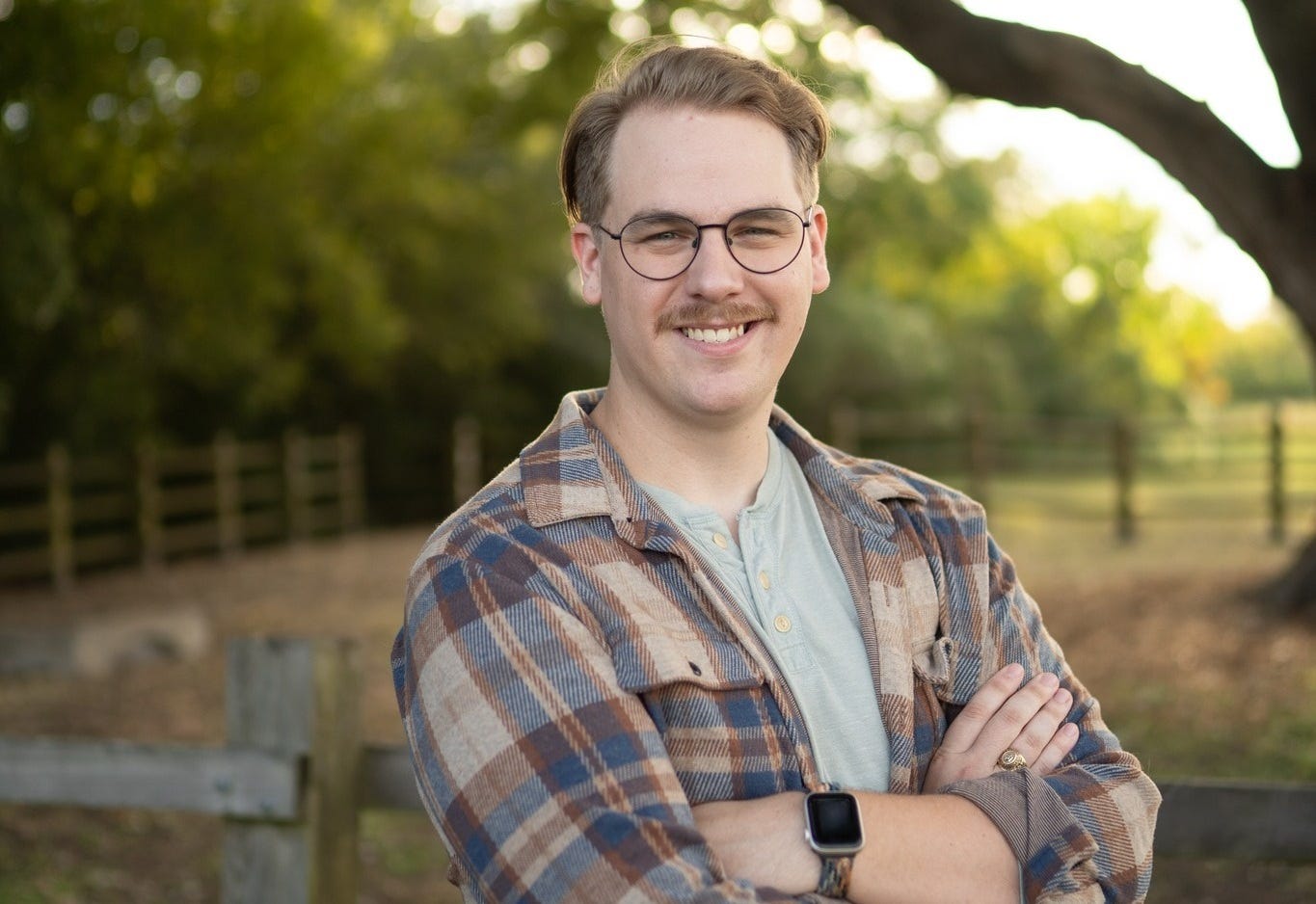
Who is Cameron Rollwitz?
Cameron Rollwitz comes from working-class roots, long hours, and a steady climb through school and the workforce without a safety net to fall back on. Brought to Texas at age two, he grew up in Klein, attended Klein Oak High School, and worked his way through Lone Star College before earning two bachelor’s degrees from the University of Houston, one in Psychology and one in Religious Studies. He went on to complete a master’s degree focused on how people build identity and belonging, which feels especially relevant in a state where so many people are trying to find their footing amid rising costs and shrinking opportunities.
Rollwitz frames his campaign around a simple idea. Texas should actually work for the people who live here. His agenda is public transportation, high-speed rail, better internet, affordable education, reliable energy, and it’s rooted in the lived experience of someone who knows what it feels like to do everything right and still struggle.
He talks a lot about “connecting Texas,” and he means it literally. He wants high-speed rail linking major cities, rural towns brought back into the fold rather than left behind, and modern infrastructure that enables ordinary people to move, work, and participate in their communities.
Rollwitz proposes a stair-stepped franchise tax that asks more of large corporations while protecting small businesses, using that revenue to fund free community college and trade school for Texans. He wants to crack down on hedge funds buying up Texas homes and shutting families out of the market, and the data backs him up (corporate investors bought nearly a third of all homes sold in Texas in 2021). He pairs all of this with teacher-centered reforms, calling for collective bargaining rights, stronger pensions, and actual budgets for classroom supplies so educators aren’t floating the system on their own paychecks. Whether you agree with every line item or not, Cameron Rollwitz is running a solid working-class campaign.
The district.
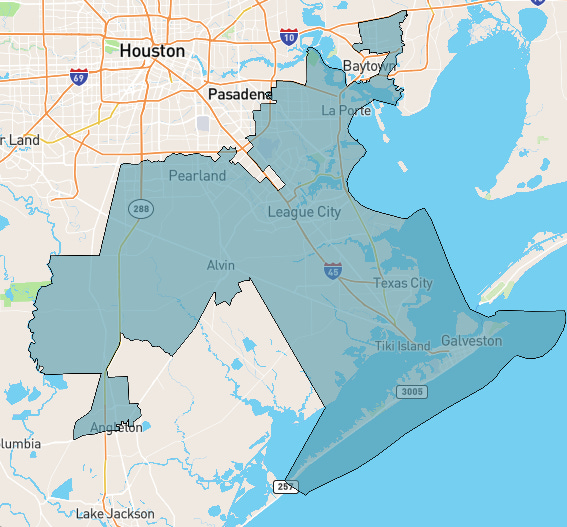
Senate District 11 is interesting because this is the district Mayes Middleton is leaving for his AG run. Recently, I was told that Middleton has broken “billionaire status.” However, this district is solidly middle-class. Moreover, it’s an urban-uburban hybrid, with only a 47.3% Anglo population. The rest of the population is 30% Hispanic, 14.6% Black, and 7.6% Asian.
Poverty in this district is about 4 points lower than the state average, and household incomes are higher than in Texas as a whole, with 46% of households making over $100,000, compared to 38% statewide. At the same time, nearly 40% of renters in SD11 are rent-burdened, paying 35% or more of their income toward housing. It is a district with wealth, but also with cost pressures creeping upward.
SD11’s economy is anchored in education, healthcare, manufacturing, construction, and public-sector jobs. The district’s workers are commuters. Over 30% have a 15–29 minute commute, and another 21.6% spend 30–44 minutes traveling to work, with only 0.5% using public transit. SD11 is built for cars, not people, which makes Rollwitz’s transportation vision especially relevant.
SD11 is the definition of a “high-opportunity, high-cost” suburban district. Educated, economically stable overall, and rapidly diversifying. These Texas districts are shifting politically as housing prices climb, wages stagnate, and younger families feel squeezed. The district’s low poverty rate and high educational attainment also mean voters tend to be engaged and responsive to issues such as public schools, property taxes, and infrastructure investment.
Rollwitz’s platform directly targets SD11’s pain points of commutes, cost of living, housing pressure, and the feeling that Texas’s growth has outpaced its public investment. His working-class framing also speaks to the large middle-income and upper-middle-income populations who feel squeezed but not seen.
The incumbent.

The incumbent is Mayes Middleton, but he’s not running for re-election, instead he’s running for the Attorney General’s seat. I do not expect him to win.
Texas House Representative Dennis Paul (R) from the Houston area is running for this seat on the Republican side. Grassroots Republicans call Paul a RINO, so I don’t expect a lot of excitement behind him.
Rollwitz will have a Democratic primary challenger, Shannon Dicely.
In Cameron Rollwitz’s own words.
Below are some questions I asked Rollwitz, based on previous reader polls, along with his answers.
Q: Should Texas end tax subsidies and abatements for large corporations?
Absolutely, this results in a significantly uneven tax burden for the average Texan. The average Texan contributes to roughly 80% of the state budget, whereas corporations and business only contribute roughly 20%. They do this through these subsidies and abatements.
Q: Should Texas move toward a universal, publicly funded healthcare system?
Unequivocally yes. We can do this by converting the percentage of revenue spent on healthcare premiums by businesses to fund Texas Medicare, and then allowing Texas Medicare to negotiate with healthcare providers. For businesses, the money simply goes to a different place. For the employee, they are no longer stuck with their employer for health insurance.
Q: Do you oppose school vouchers and efforts to privatize public education?
Yes. Especially given the lack of transparency and how this only benefits the rich already. The vouchers do not cover the full cost of tuition, nor do they cover extra fees, uniforms, books, supplies, or any of it. The voucher is only effective for those of means already. It also exacerbates our school funding issue. By eliminating vouchers and creating a permanent school fund so the state government actually contributes to schools in Texas, we can re-strengthen our public schools.
Q: Should Texas guarantee free school meals to all K–12 students, regardless of income?
Yes. It would only cost the taxpayer $47/year to ensure no child is hungry at school. We already have this money in the rainy day fund and a budget surplus
Q: Should local police be barred from enforcing federal immigration law?
Yes. They are already overworked as it is, and responding to calls, they have no business being involved in such mental health crises or drug overdose calls. Adding a new and significantly time-consuming responsibility and trusting the police to abide by the law is a recipe for disaster.
Bonus Question: Who are your political role models, living or dead?
Zohran Mamdani, AOC, and Bernie Sanders.
Senate District 11 is changing economically, demographically, and politically, and whoever represents it next will inherit a constituency that wants real solutions, not culture-war distractions.
Rollwitz is betting that voters are ready for big ideas like public transportation that actually works, housing policy that favors families rather than hedge funds, an education system that invests in teachers rather than bleeding them dry, and a healthcare system that stops tethering people to bad jobs out of fear of losing coverage.
Whether SD11 is ready to elect a Democrat is an open question. But what’s clear is that Rollwitz is running the kind of race Democrats should be paying attention to, one rooted in working-class experience and aimed at the real, material needs of Texans. In a district built on long commutes, rising costs, and shrinking public investment, he’s offering a different path, one centered on connection, mobility, and shared prosperity.
SD11 has endured years of neglect from lawmakers more interested in cultural battles than practical solutions. Rollwitz is trying to flip that script. The question now is whether voters are ready for a candidate whose priorities reflect their daily realities instead of someone else’s ideology.
You can find more about Cameron Rollwitz from his website, Instagram, Facebook, or Threads.
Click here to find out what Legislative districts you’re in.
LoneStarLeft is a reader-supported publication. To receive new posts and support my work, consider becoming a free or paid subscriber.
Follow me on Facebook, TikTok, Threads, YouTube, and Instagram.