


This series is called Meet the Candidates. Over the next three months, I’ll spotlight a handful of Democratic races each month, mainly in the Legislature and in Congress. These aren’t endorsements. They’re introductions, a way to understand who’s running, the districts they hope to represent, and what’s at stake for people across Texas.
Who is Denise Wooten?
Denise Wooten spent 30-plus years as a clinical psychologist before she decided Texas needed her in Austin. She’s also spent the last seven years teaching as an adjunct professor at North Central Texas College. She’s a preacher’s kid from the Midwest, which explains the sliding-scale fees and the pro bono work she kept doing long after her practice made it financially painful.
Wooten worked from age 15 on. Nobody handed her the doctorate she eventually earned at Baylor, where she also met her husband, a CPA who runs his own small business in Flower Mound. Two married daughters, two grandkids, and by her account, the whole family is in on this campaign.
Politically, Wooten is running as the person who’s spent three decades doing the unglamorous work of showing up for people the system tends to overlook, and she’s pitching HD 63 the same. Public education funded and protected, healthcare access expanded, property taxes eased for the middle class, fair voting maps without the mid-decade gerrymander, and reproductive choice left with the woman making it. She backs sensible assault rifle regulation and says climate change is a problem worth Texas taking seriously.
The district.

Southcentral Denton County ⬆️. HD63 is not the district you picture when someone says “flip target.” Per capita income sits at $56,728, nearly $16,000 above the state average. The average home value is $512,085, compared with a state average of $366,039. Only 6.1% of the district lives in poverty, less than half the state rate.
It’s also educated. Bachelor’s degree or higher: 49% of residents age 25 and up, compared to 33.8% statewide. That single stat matters more than almost any other in this profile, because degree attainment is the strongest predictor we have of the suburban anti-MAGA drift that’s been reshaping Texas since 2018.
Demographically, the district is 50.0% Anglo, 50.0% non-Anglo, with Hispanic residents at 22.0% and Asian residents at 14.3%, both well above the state average for Asian population specifically. But the voting-age population skews whiter than the general population, 53.3% Anglo versus 46.7% non-Anglo, which is the usual story in fast-growing suburban districts where the non-Anglo population trends younger.
But here’s the number that should have every Denton County Democrat paying attention. Kamala Harris lost HD 63 by 10.5 points. Colin Allred lost it by 5.9. Ben Bumgarner, running against Democrat Michelle Beckley, won by 11.4.
Allred ran nearly five points ahead of Harris in this district and Beckley still lost by double digits. That’s a down-ballot drop-off problem, ticket-splitters who’ll vote for a Senate Democrat but haven’t been given a reason to trust the State Rep candidate yet. Closing that gap, not chasing some demographic shift that hasn’t happened yet, is the whole ballgame here.
Turnout in the district ran hot: 66.0% against a 61.3% state average. That’s Denton County, high-propensity, high-information, and it cuts both ways. These voters show up. The question is whether Wooten gives enough of them a reason to show up for her specifically.
What will it take to flip?
Beckley needed 5.7 more points to hit 50%. Allred already found nearly six points of ticket-splitters in this exact district in the same election. They exist. The path is consolidating people who already proved willing to vote against Republicans at the top of the ticket in 2024.
And 2026 isn’t 2024. A Governor’s race with Abbott genuinely vulnerable, a Senate race with Paxton as the nominee carrying all his baggage into a general, and a statewide environment that’s shaping up to be the most hostile to Texas Republicans in over a decade. If the wave materializes anywhere close to what the data suggests it could, HD 63 isn’t a reach. It’s exactly the kind of educated, affluent, ticket-splitting suburban seat that flips first.
The incumbent.
Ohio native Ben Bumgarner voted for the largest school voucher program in Texas history. And when Democrats tried to let voters decide for themselves, he killed that option. He voted to table an amendment that would have put the school voucher question on the November ballot.
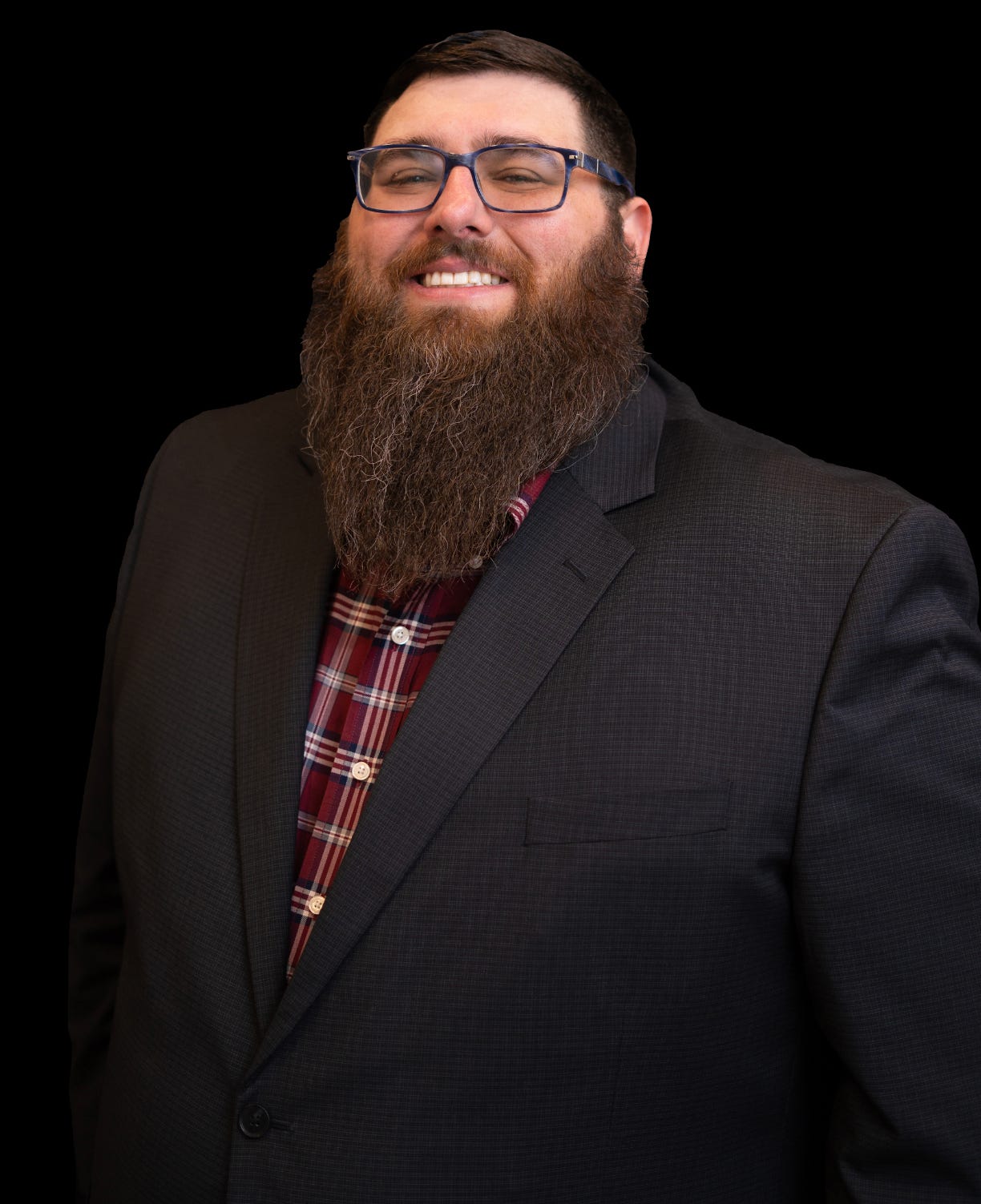
He was absent for a teacher pay vote. He owns a gun manufacturing company and legislates accordingly. His day job is owner of Evolve Weapons Systems, which develops and sells rifles and custom firearms. He wanted to bar the opposing party from committee chairmanships altogether.
He co-sponsored the bill pulling books off school library shelves. He was a co-sponsor of the bill to remove sexually explicit materials from Texas schools, part of the broader book-banning push that’s swept Texas school boards and libraries the past few cycles.
Bumgarner ran unopposed in his own primary in a district that’s a coin flip demographically. Bumgarner ran unopposed in the Republican primary and will be on the November 2026 general election ballot, which tells you the GOP establishment sees this seat as safely his, at least until Denton County voters say otherwise.
His fundraising and endorsements run straight through the Abbott-Phelan-voucher machine. He picked up key endorsements from Governor Greg Abbott and House Speaker Dade Phelan in his last race, and Teach the Vote flags him as endorsed in the 2024 Republican primary by Gov. Abbott, part of Abbott’s pattern of endorsing incumbents who supported his voucher bill. He is not an independent voice in Austin. Also, his pro-voucher wife is running for the SBOE.
In Denise Wooten’s own words.
Below are some questions I asked Wooten, based on previous reader polls, along with her answers.
Q: Do you support a statewide minimum wage increase to at least $15/hour?
Absolutely the minimum wage should be $15 per hour at least. Even at $15 an hour, it would be difficult to meet current living expenses, especially with the devastating negative impact Republicans have had on the economy and cost of living.
Q: Should Texas end tax subsidies and abatements for large corporations?
It has long been my belief that tax subsidies and abatements for large corporations, many of whom donate to corrupt Republicans, should not get these beneficial perquisites. First, those big companies, especially data centers, take more from the people than they give in economic opportunity. Secondly, it leaves the burden of funding public education and other necessary government services squarely on the backs of working Texans through regressive sales and property taxes. Furthermore, religious organizations and private schools are exempt from property taxes, which should not be the case if we have true separation of church and state.
Q: Do you oppose school vouchers and efforts to privatize public education?
There are three main ways the Republicans have tried to inflict privatization of public education onto the populace of Texas. The most glaring example is private school vouchers, or “Educational Savings Accounts,” as Republicans prefer to call them to make them sound good, which are antithetical to the role of public education in equalizing opportunity for all Texans. A fully funded public education system should have bipartisan support, as data show that educational opportunity increases life satisfaction, earning potential, and economic stability and growth. Further, the privatization of public education is not just tied to the voucher scam, but also relates to the proliferation of charter schools that are not held to the same standards and accountability as traditional public schools. A third concerning form of privatization is when the state takes over “Academically Unacceptable” districts. The governor’s appointees or cronies on the board can structure the districts however they wish, including bringing in private entities by calling them “outsourcing partnerships.” The definition and criteria for “Unacceptable Performance” using the A-F formulation are unfair to struggling districts. They must be changed, not just because they are unfair, but because they give the state government free rein to alter districts in ways that benefit it, not the students. I am categorically against all three of these attempts to privatize the public education that Texas children need.
Q: Should Texas guarantee free school meals to all K–12 students, regardless of income?
Texas has sufficient funds to provide free school meals to all students. If all students can receive them, it helps students learn better because they are adequately nourished, and it also reduces the visibility of income disparities among those who currently qualify.
Q: Do you support closing or downsizing state prisons and redirecting that funding to community-based alternatives like mental health care, housing, and youth programs?
Due to the over-representation of mentally ill inmates relative to community percentages, it is clear that Texas has not provided sufficient funding and services to those in need of mental health care, basic essentials for living, and youth development (which also relates to why we need to fund public education). Texas is lousy at human services in general, ranking about 45th out of 50 states in per capita expenditure, but it is 2nd in wealth as measured by GDP. The money is not going to those who need a helping hand, and this is unconscionable.
Q: Do you support publicly financed elections to reduce corporate and PAC influence?
It is morally reprehensible that elections are often determined by big-dollar donors and PACs, as that limits true representation of the majority of Texans. Instead, we end up with corruption and undue influence over government officials who make decisions that affect our lives.
Bonus Question: How do you plan to engage and energize young and working-class voters?
The affordability of essentials for living, college, medical care, and opportunities to emancipate and have a home worries young adults and working-class voters. Engaging the people most affected by poor affordability means prioritizing legislation that directly supports their progress in life.
HD63 is a district Democrats win by showing up more credible, and Wooten’s entire biography is built for exactly that argument.
Thirty years treating patients, seven years teaching, three decades of sliding-scale fees for people who couldn’t afford full price.
The math says this seat is gettable, not guaranteed. Allred already proved nearly six points of ticket-splitters exist in HD63. Beckley needed 5.7 more points and didn’t get them, likely because Denton County voters who’ll cross over for Senate haven’t yet been given a reason to cross over for State Rep. That’s a name-ID and message problem.
Bumgarner isn’t hiding what he stands for. Vouchers, book bans, an absence on teacher pay, a gun manufacturing business, and a caucus that wanted to shut Democrats out of committee chairs entirely. He ran unopposed in his own primary because Austin Republicans consider this seat safe. Whether Denton County agrees with that assessment is what November decides.
If the statewide wave is even half of what the current environment suggests, HD63 sits exactly where waves crash first, affluent, educated, suburban, and already trending. Wooten’s job between now and November is simple. Give the Allred voters a reason to finish the ballot.
You can find out more about Denise Wooten on her website or Facebook.
72 days until the November election!
Did you know you can find links to all the previous Meet the Candidate articles on these lists?:
Click here to find out what Legislative districts you’re in.
Thank you, Michelle!!! Just shared this one on bsky too.