
Meet The Candidates: Justin Early For Texas Congressional District 31
The math, the map, and the man running against inertia.

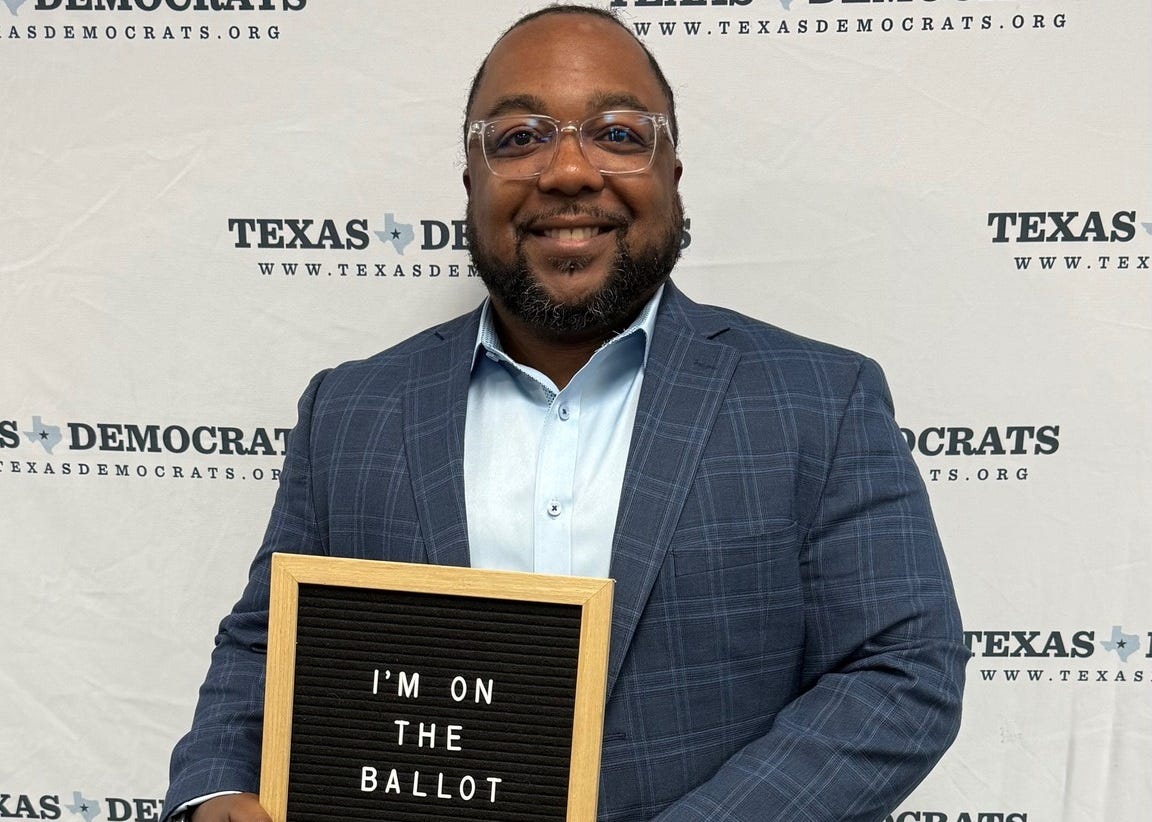
This series is called Meet The Candidates. Over the next ten months, I’ll spotlight a handful of Democratic races each month, mainly in the Legislature and in Congress. These aren’t endorsements. They’re introductions, a way to understand who’s running, the districts they hope to represent, and what’s at stake for people across Texas.
Note: I’m only doing two Meet the Candidate articles on Sunday through the next four weeks, with limited openings left. If you’re a Democratic candidate in a competitive primary and haven’t already reached out, feel free to do so.
Who is Justin Early?
Justin Early is a veteran, a cybersecurity specialist, and a Democrat who came up through a working-class military family. Both of his parents served in the US Army. After graduating from Leander High School in 1998, Early enlisted in the Army and served as a paratrooper at Fort Bragg before moving into a highly technical role as a LAN Systems Administrator at the Pentagon.
In the aftermath of 9/11, he worked on national security infrastructure. That experience shaped the rest of his career. After leaving the military, Early transitioned into cybersecurity, where he now works as a Cybersecurity Architect at Dell Technologies, helping secure data, protect critical infrastructure, and navigate privacy and compliance in an increasingly hostile digital world.
Early served as a Democratic precinct chair in Tarrant County, worked on a Human Relations committee, and was a delegate during Barack Obama’s 2008 campaign. Today, he lives in Georgetown with his wife, Toni, and has seven adult children.
The district.
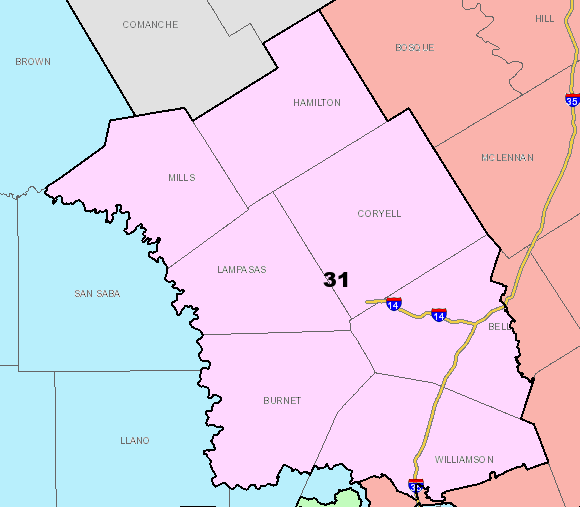
Under the current map, TX-31 is still Republican-leaning, but it is not a lost cause. The demographics tell a more complicated story. TX31 is majority white by VAP (about 57%), but 43% of the voting-age population is non-white, including a significant Black population (~15.5%), a Hispanic population of just over 20%, and a growing Asian population near 5%. So, this district is not culturally or politically static. It’s suburban, exurban, and increasingly stretched between old-guard Texas conservatism and newer, more diverse communities moving in for jobs, affordability, and schools.
In 2024, about 63% of registered voters showed up, but in 2022, that dropped to 48%. Midterms are where Democrats lose ground here because they don’t vote consistently.
Flipping TX31 is about math plus mobilization.
Democrats don’t need to “win over” every Republican voter here. They need to dramatically increase turnout among Black, Hispanic, and younger suburban voters, particularly in lower-turnout precincts. The numbers are already there. They just aren’t fully activated yet.
TX31 voters respond better to competence and stability than to ideology. Infrastructure, grid reliability, broadband, healthcare access, and cost-of-living pressure matter more here than national cable-news theatrics. Candidates who sound like they’re running for Twitter lose. Candidates who sound like they’re running to fix systems gain traction.
The incumbent.
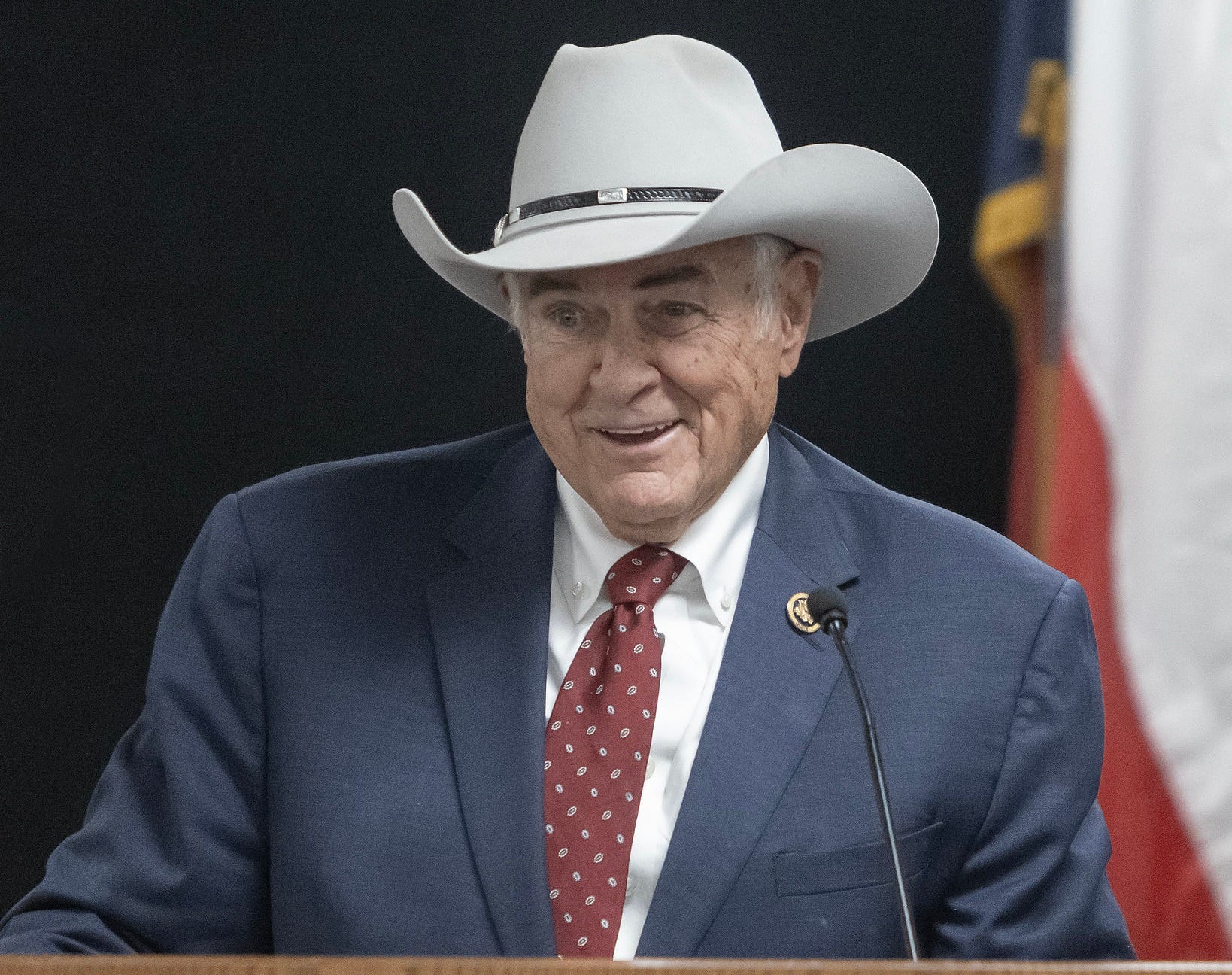
If someone said to me, “Explain the average 1980s Texas Republican.”
I’d tell you, an older white guy in a $10,000 suit, a cowboy hat, boots, an unmistakable southern drawl, and the intellect of a cantelope. Think Rick Perry. Think Dubya Bush. Think Sid Miller and Drew Darby. And absolutely think Congressman John Carter.
Carter will be 85 years old this year. He spent most of his life in Central Texas and graduated from the University of Texas before it was desegregated. Living in the Jim Crow South until he was 24 years old really shaped the Congressman’s world-view, and you can see today, still impacts the way he governs.
This year, Carter has nine primary opponents.
Early also has a primary opponent.
In Justin Early’s own words.
Below are some questions I asked Early, based on previous reader polls, along with his answers.
Q: Do you support a Green New Deal or similar large-scale federal climate action plan?
Yes. Energy demand is rising, and meeting it with cleaner energy is essential to protecting air and water, public health, and long-term economic stability.
Q: Do you support universal, publicly funded healthcare (i.e., Medicare for All or a similar single-payer system)?
Yes. I support any system that gets us to universal, publicly funded healthcare so everyone can access care regardless of income or employment.
Q: Do you support ending qualified immunity and instituting federal police accountability standards?
Yes. Qualified immunity too often shields misconduct from accountability. Federal standards are needed to protect civil rights, build trust, and ensure equal justice under the law.
Q: Do you support a federal jobs guarantee and large-scale public investment in housing, transit, and care infrastructure?
Yes. I support a federal jobs guarantee and major public investment in housing, transit, and care infrastructure to expand opportunity and meet real community needs.
Q: Do you support expanding the Supreme Court or instituting term limits for justices?
Yes. Supreme Court reform, including expansion or term limits, is needed to reduce politicization and strengthen public confidence in the judiciary.
Bonus Question: What does being a Democrat mean to you in 2026?
Being a Democrat means leading with empathy and responsibility, and fighting for policies that put working families first.
TX31 is not an easy district.
But it is a district that is changing, quietly and unevenly, in ways that the incumbent has never had to engage with and likely never will. The electorate is diversifying. And the problems people care about are not being solved.
Justin Early is running as someone who understands systems, accountability, and what happens when institutions fail the people who depend on them. Flipping TX31 will take turnout. It will take organizing. It will take voters deciding that “good enough” stopped being good enough a long time ago.
This race is worth paying attention to.
You can find out more about Justin Early on his website, Facebook, Instagram, Twitter, TikTok, and Bluesky.
February 2, 2026: Last Day to Register to Vote
February 17, 2026: First Day to Early Vote
March 3, 2026: Primary Election
Click here to find out what Legislative districts you’re in.
LoneStarLeft is a reader-supported publication. To receive new posts and support my work, consider becoming a free or paid subscriber.
Follow me on Facebook, TikTok, Threads, YouTube, and Instagram.
I shared this one on bsky too, but forgot to tell you! Thank you! Love, "... the man running against inertia." Ain't that the truth for so many of these races!!!