

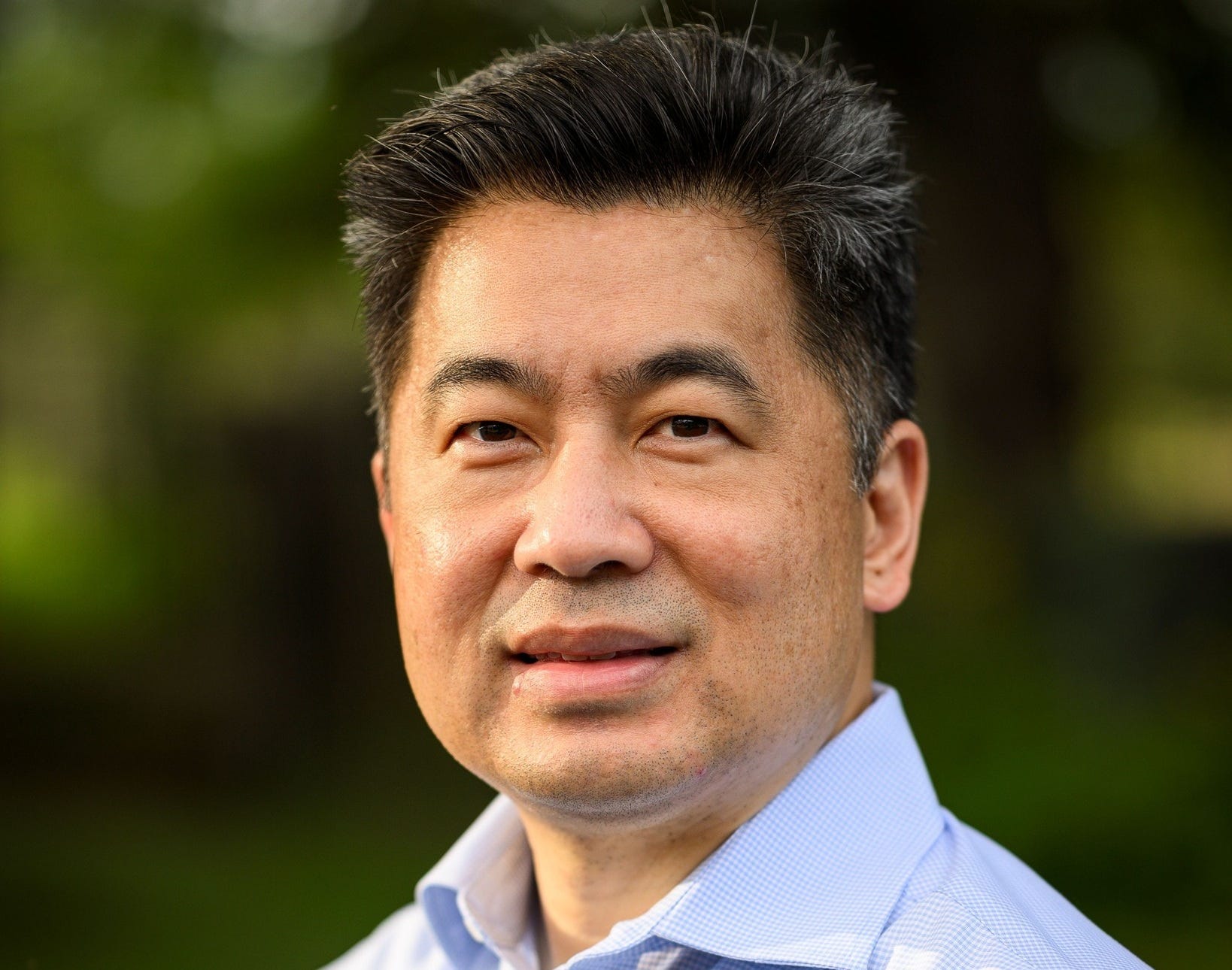
This series is called Meet The Candidates. Over the next twelve months, I’ll spotlight a handful of Democratic races each month, mainly in the Legislature and in Congress. These aren’t endorsements. They’re introductions, a way to understand who’s running, the districts they hope to represent, and what’s at stake for people across Texas.
Who is Robert Mihara?
Robert Mihara’s entire life has been defined by showing up, doing the work, and actually giving a damn about people.
He’s a West Point graduate who spent twenty years as an Army officer, deploying to Iraq and Afghanistan, commanding soldiers, and eventually returning to West Point to teach history. After retiring as a lieutenant colonel, he attended law school to pursue public-interest law, fighting on behalf of low- and moderate-income families in Bexar County. Today, he’s a licensed attorney in Texas and Pennsylvania and is now the interim executive director for a nonprofit that helps people who are usually ignored by the system.
Mihara serves on the board of Disability Rights Texas and works through Morgan’s Multi-Assistance Center to help families struggling with the state’s broken disability-services maze.
And now he’s running because San Antonio’s Far West and Southside deserve better than the underfunded schools, underpaid workers, crumbling infrastructure, and healthcare deserts that have become “normal” in Texas politics. His platform is exactly what you’d expect from someone who has built his career around service.
The district.
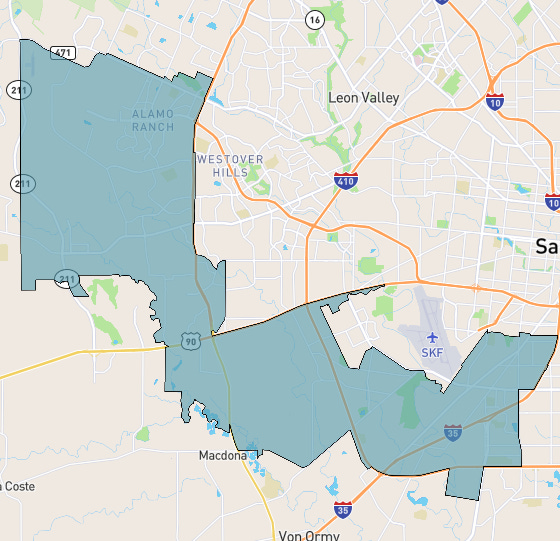
HD117 and Mihara is running against a Conservative Democrat incumbent, and we’ll get to that. First, let’s talk about this district and what it’ll take to win here. HD117 is 69% Hispanic, 81% non-Anglo, and home to many families with kids. Nearly half of all families have children under 18. It’s also a district with large household sizes (average 3.11 people per home) and a significant number of single-parent families, especially single mothers, who are disproportionately carrying the load with limited state support.
Economically, HD117 is solidly working and middle-class. Most households fall in the $50k–$99k range, but about 14% of residents live below the poverty line, and single-parent families with children are the most likely to be struggling.
HD117 also has one of the highest active-duty and veteran populations in the county. In terms of infrastructure and mobility, most people are commuting by car, and commute times are long. Only 1.2% use public transit.
The Democratic incumbent.
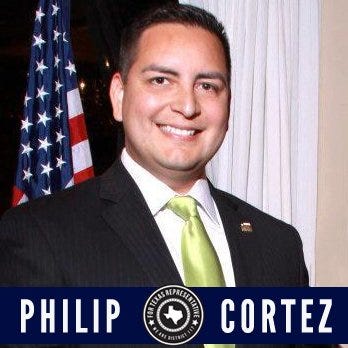
Phillip Cortez (D-HD117).
Phil, ‘ol buddy, ‘ol pal, you’ve let us down so many times before, but let’s stick to 2025.
Rep. Cortez stayed in town and gave the Republicans a quorum when the rest of the House Democratic Caucus broke quorum to go to Chicago over the maps.
He voted in favor of SB3, to ban THC in Texas.
He voted for the Republicans’ RFK Jr’s copy-cat MAHA bill.
Cortez voted to give $400 million of our tax dollars to the film industry.
The Representative voted in favor of SB38, to gut basic tenant protections for anyone who rents.
He voted in favor of SB11, which promotes Evangelical Christianity in public schools.
He voted to expand pre-trial detention (one of the ballot amendments on November 4th).
He voted to ban community bail funds.
There’s a lot more. You get the gist of it. Cortez has been a Conservative Democrat, teetering on the fence for many years. Cortez is one of about a dozen Democrats whom is constantly identified as at risk of switching parties.
He also has a history of taking right-wing PAC money, like Texans for Lawsuit Reform, NuStar PAC, and Wholesale Beer Distributors of Texas (hello, THC ban).

In Robert Mihara’s own words..
Below are some questions I asked Mihara, based on previous reader polls, along with his answers.
Q: Do you support a statewide minimum wage increase to at least $15/hour?
Yes, I support raising the minimum wage to at least $15 an hour. But my focus is on whether people can earn enough to live with security and dignity. I believe that our long-term goal must be actual living wages, rather than a means of getting there, like minimum wage.
Equity and building the winning coalition for that living wage means recognizing the role of small, local businesses in our communities. I believe that many want to pay fair wages but struggle with thin margins. To make sustainable progress toward living wages in Texas, I’m open to targeted wage support—such as temporary subsidies or tax credits for small businesses—so we can raise pay with the support of more local employers.
Q: Do you oppose school vouchers and efforts to privatize public education?
I oppose school vouchers and will work to reverse the ongoing privatization of public education. In the near term, our focus must be on demanding full transparency in how voucher funds are used and ensuring that public dollars prioritize vulnerable student populations.
By shining a light on waste and inequity in the voucher system, we strengthen the case for fully funded public schools. Real reform of our education funding system will take a few election cycles, but we can start now by defending transparency, accountability, and equity in education.
Q: Should higher education in Texas be free or debt-free at public institutions?
I believe public higher education should be debt-free. Texas—like most states—has walked away from its responsibility to invest in our colleges and universities, shifting the cost onto students and families who are told that higher education is their only path to success. We need to restore that public commitment to affordable education, but we also need to broaden the conversation beyond “free college.”
Before we talk about free tuition, we should take a hard look at how we guide and prepare young people for life after high school—whether that’s a university degree, skilled trade, or another path to meaningful work. Our goal should be to build a system that values every form of learning and training that helps Texans build secure, dignified lives. College isn’t the right path for everyone, and our investments should reflect that reality. A truly equitable education system funds opportunity in every form—not just four-year degrees.
Texas should expand need-based grants, fully fund community colleges, and support partnerships that make technical and vocational programs accessible without long-term debt. No one should be priced out of opportunity because of where they were born or how much their family earns.
Q: Would you support redirecting state subsidies from fossil fuels to fund community-owned solar, wind, and battery projects in low-income and rural areas?
I support investing in community-based renewable energy projects that directly benefit low-income and rural Texans. While redirecting fossil fuel subsidies is one possible path, my priority is building up affordable, reliable options for people who need them most—while making clean energy competitive in the marketplace. I think that the most likely progress comes from meeting immediate community needs and expanding viable alternatives.
As renewable energy becomes stronger and more accessible, public support will naturally shift away from fossil fuel subsidies. I am concerned that defunding fossil fuels may require more political capital than is available in the near term and that resisting that will frustrate immediate opportunities for progress.
Q: Should Texas stop funding Operation Lone Star and redirect that money to border community infrastructure and services?
I think Operation Lone Star was a mistake from the start. It has wasted billions of taxpayer dollars without delivering meaningful results. It has diverted resources from real community needs in addition to creating humanitarian and legal issues.
Texas should redirect those funds to benefit border communities, investing in solutions that give residents a sense of order without needless and harmful militarization, such as focused infrastructure improvements, as well as more measures that address more fundamental and immediate needs, such as healthcare, housing, education, and public safety. Real border security comes from stable, well-supported communities and effective federal coordination, not from expensive political stunts that drain our state budget.
Bonus Question: How do you plan to engage and energize young and working-class voters?
I think that a fundamental problem is our disconnectedness from institutions and community—we’re overly plugged into social media bubbles or associated gatherings.
So, I believe that candidates need to go to where people are and make democracy real to them by representing themselves as literal representatives—piercing through the noise by being present.
We energize voters, both young and working class, by making civic participation accessible and meaningful. Being present is a foundational step, but I would build on that by fighting to expand voting access, supporting public education, and improving wages and job security—showing that government can deliver tangible results.
When people experience the dialogue and the fruits of that engagement in the form of real improvements in their daily lives, I believe that participation and trust will naturally grow.
HD117 deserves a representative who reflects its people, not one who votes with Republicans every time the pressure is on.
It’s a working-class, majority-Hispanic community with deep military roots, long commutes, young families, and real economic strain. It’s the kind of district that can’t afford lawmakers who side with corporate PACs, culture-war bills, and right-wing priorities.
Robert Mihara is running on decades of service, real experience helping low-income families navigate broken systems, and a platform built around public schools, living wages, infrastructure, healthcare access, and dignity for veterans and people with disabilities. And unlike the incumbent, he isn’t taking checks from Republican mega-PACs while voting to ban THC, gut tenant protections, promote Christian nationalism in schools, or help Greg Abbott score political points.
This race will come down to turnout, but also to clarity. Voters here deserve an honest look at their choices. That’s what this series is for. What they do with that information is up to them, but one thing is certain. This district is changing, and the days of “Democrats” who vote like Republicans are numbered.
You can learn more about Robert Mihara at his website, Instagram, Threads, and Facebook.
Click here to find out what Legislative districts you’re in.
LoneStarLeft is a reader-supported publication. To receive new posts and support my work, consider becoming a free or paid subscriber.
Follow me on Facebook, TikTok, Threads, YouTube, and Instagram.
There seen to be a number of really good candidates. Thanks for getting the word out
I do what I can but sometimes, on a rare occasion, I wish I were wealthy to be able support ALL the good candidates.
Amazing job