

This series is called Meet The Candidates. Over the next eleven months, I’ll spotlight a handful of Democratic races each month, mainly in the Legislature and in Congress. These aren’t endorsements. They’re introductions, a way to understand who’s running, the districts they hope to represent, and what’s at stake for people across Texas.
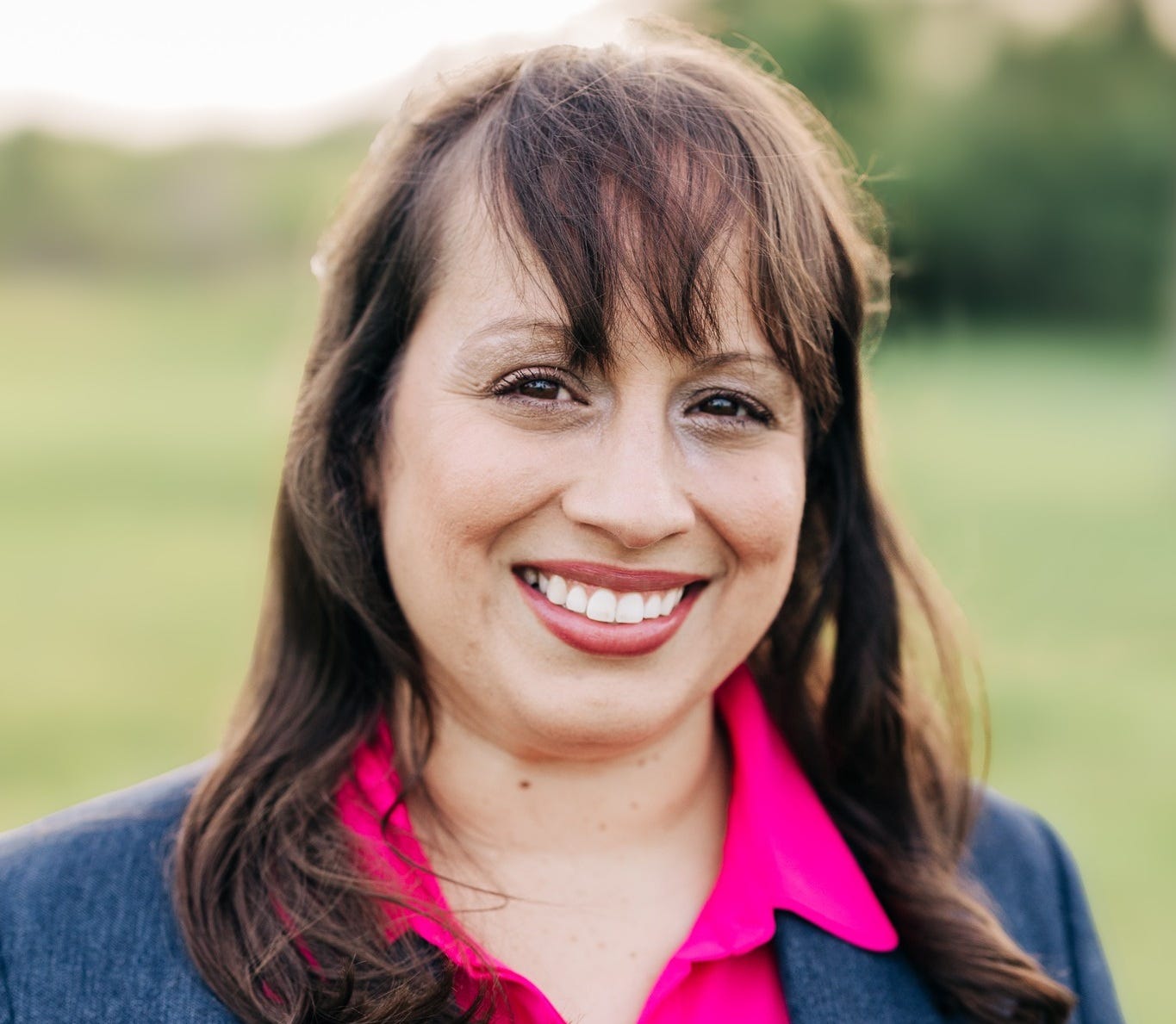
Who is Shannon Dicely?
Shannon Dicely is a longtime Texas Senate District 11 resident, a mother, and a breast cancer survivor. After nearly two decades raising her family in the district, volunteering in schools, and serving in neighborhood and civic leadership roles, Dicely’s life changed in 2020 when she was diagnosed with breast cancer in the middle of the pandemic. Facing aggressive treatment during lockdown, often alone, she came out of that experience with a sharpened understanding of how much access to healthcare, public systems, and community support actually matter when people need them most.
That experience, combined with years of local advocacy around public schools and voting rights, pushed Dicely to return to school to study political science at Sam Houston State University and ultimately to run for office. Her campaign centers on affordability, fully funded public education, accessible healthcare, and strengthening democracy, with a belief that government should make everyday life more livable for working families while respecting personal freedom and delivering accountable leadership.
The district.
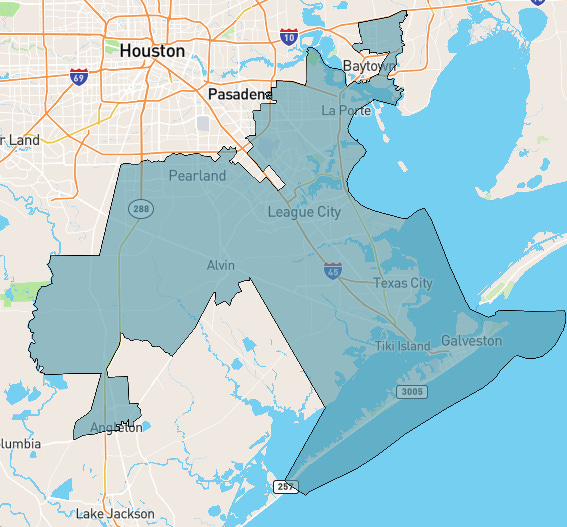
Tthis district is solidly middle-class. Moreover, it’s an urban-uburban hybrid, with only a 47.3% Anglo population. The rest of the population is 30% Hispanic, 14.6% Black, and 7.6% Asian.
Poverty in this district is about 4 points lower than the state average, and household incomes are higher than in Texas as a whole, with 46% of households making over $100,000, compared to 38% statewide. At the same time, nearly 40% of renters in SD11 are rent-burdened, paying 35% or more of their income toward housing. It is a district with wealth, but also with cost pressures creeping upward.
SD11’s economy is anchored in education, healthcare, manufacturing, construction, and public-sector jobs. The district’s workers are commuters. Over 30% have a 15–29 minute commute, and another 21.6% spend 30–44 minutes traveling to work, with only 0.5% using public transit.
SD11 is the definition of a “high-opportunity, high-cost” suburban district. Educated, economically stable overall, and rapidly diversifying. These Texas districts are shifting politically as housing prices climb, wages stagnate, and younger families feel squeezed. The district’s low poverty rate and high educational attainment also mean voters tend to be engaged and responsive to issues such as public schools, property taxes, and infrastructure investment.
The incumbent.

The Republican incument is billionaire demon Mayes Middleton. However, he’s leaving this seat to destroy the lives of more Texans as Attorney General hopeful. Y’all, he can’t win.
So, basically, this will be a fresh empty seat.
Texas House Representative Dennis Paul (R) from the Houston area is running for this seat on the Republican side. Grassroots Republicans call Paul a RINO, so I don’t expect a lot of excitement behind him.
Dicely does have a primary candidate, Cameron Rollwitz.
In Shannon Dicely’s own words.
Below are some questions I asked Dicely, based on previous reader polls, along with her answers.
Q: Do you support a statewide minimum wage increase to at least $15/hour?
Yes, for over a decade and half, the dysfunction of the federal government has caused the federal minimum wage to remain stagnant. Working Texans deserve a livable wage, and since we are unable to rely on the feds for this, the state government must act. With concerns for small business, the best approach would be to roll out the increase in increments so the effect would not be immediate while still setting the goal at $15/hour in a reasonable and timely manner.
Q: Do you oppose school vouchers and efforts to privatize public education?
I absolutely am opposed to school vouchers and efforts to privatize public education. I have volunteered on local campaigns for candidates that were willing to fight for our public school system and even helped prevent a takeover of my school district’s school board in the 2024 election. Time and time again, we see that school voucher programs are just welfare for the wealthy. We can already see this happening with the organizations hired for the roll out of the recently passed voucher program. If Texas schools are broken, we must invest in them and not drain resources from them.Texas needs fully funded public education just as our state constitution promises.
Q: Should higher education in Texas be free or debt-free at public institutions?
Yes, every Texan deserves access to affordable higher education without a lifetime of debt. Passed in 2003, the B On Time loan offered zero interest loans to Texas students who graduated in four years with at least a 3.0 GPA. By 2015, the program had encountered difficulties and was phased out. Like so many things in Texas, it seems to me that this program should have been fixed rather than ended. Other states have programs, like Georgia's HOPE scholarship, that covers all or nearly all of tuition for Georgia residents attending in-state colleges and maintaining a 3.0 or above GPA. These are not pie-in-the-sky dreams; these are real programs that exist or have existed. Investing in our students this way while also incentivizing them is good for our workforce, boosts our economy, and keeps Texas competitive.
Q: Should Texas guarantee free school meals to all K–12 students, regardless of income?
Yes, besides the moral obligation we should all have in feeding our state’s children, guaranteed free school meals have one of the highest returns on investment. When kids are fed, their performance improves which in turn boosts school performance. Without the distraction of being hungry, children’s grades improve, and they behave better in school. Free school meals support working families, reduce administrative burdens on the schools, and ensure no child goes hungry–all while reducing the stigma for those in need.
Q: Do you support closing or downsizing state prisons and redirecting that funding to community-based alternatives like mental health care, housing, and youth programs?
The answer to emptying the prisons is to tackle the root cause of crime. We have seen in cities throughout America that the best approach to lowering crime rates is to invest in community resources such as recreation centers, pools, parks, and schools. Texas spends too much on incarceration and not enough on prevention. Programs that support job training, education, and relocation services for those at risk can be the pathway to emptying the prisons with the goal of downsizing and/or closing facilities. Real public safety is rooted in opportunity, support, and rehabilitation–maintaining an oversized prison system for the sake of itself is simply just a burden on Texas taxpayers.
Bonus Question: Who are your political role models, living or dead?
As I mentioned, voting rights are my passion, and the fight for the VRA (1965) puts many names at the front of the list, especially John Lewis and Fannie Lou Hamer. More recently in that same fight, I truly admire what the Texas House Democrats did this summer during the special sessions. By breaking quorum, they brought national attention to Abbott’s redistricting scheme. When they left the state, they left behind their families and put their lives on pause because they knew the gravity of what was taking place. I admire that kind of self-sacrifice in the fight for equal voting access.
Texas Senate District 11 is exactly the kind of district that tells us where Texas politics is headed.
It’s diverse, educated, economically stable on paper, but increasingly squeezed by housing costs, insurance spikes, and a state government that keeps prioritizing culture wars over day-to-day affordability. With the incumbent leaving and no entrenched power structure holding the seat, SD11 is genuinely up for grabs. That makes who steps forward now, and what they’re willing to fight for, especially consequential.
Shannon Dicely’s priorities align closely with the pressures facing this district. Whether voters ultimately choose Dicely or another candidate, this race offers a clear look at the values and policy debates shaping Texas’s next political chapter. As always, this series is about understanding who’s on the ballot and why it matters, because informed voters are the foundation of any functioning democracy.
You can find out more about Shannon Dicely on her website or Facebook.
February 2, 2026: Last Day to Register to Vote
February 17, 2026: First Day to Early Vote
March 3, 2026: Primary Election
Click here to find out what Legislative districts you’re in.
LoneStarLeft is a reader-supported publication. To receive new posts and support my work, consider becoming a free or paid subscriber.
Follow me on Facebook, TikTok, Threads, YouTube, and Instagram.
Thank you, Michelle! Just shared on Bsky.
I love to see the maps. I have no idea where most of these seats are until I see a map. Nov. 3rd cannot come fast enough. TACO is doing crazy 💩 and needs to be controlled. I know these seat doesn’t help that. The other others do. 🙏🏼