


This series is called Meet The Candidates. Over the next eleven months, I’ll spotlight a handful of Democratic races each month, mainly in the Legislature and in Congress. These aren’t endorsements. They’re introductions, a way to understand who’s running, the districts they hope to represent, and what’s at stake for people across Texas.
Who is William Rannefeld?
William Rannefeld is running for the Texas House because he thinks government should work for the people who live under it, not the insiders who know how to game it.
Rannefeld has spent his career inside the machinery most Texans never see. He’s worked in both the public and private sectors, including roles supporting the Texas Ethics Commission and the Texas Legislative Council. That means he understands how laws are written, how they’re implemented, and where accountability tends to break down once the headlines fade. He’s seen how transparency actually works in practice, not just how it’s promised on the campaign trail.
His work has centered on complex projects that require planning, collaboration, and follow-through. He approaches policy less as an ideological battleground and more as a set of real decisions that affect families, workers, and communities.
The district.
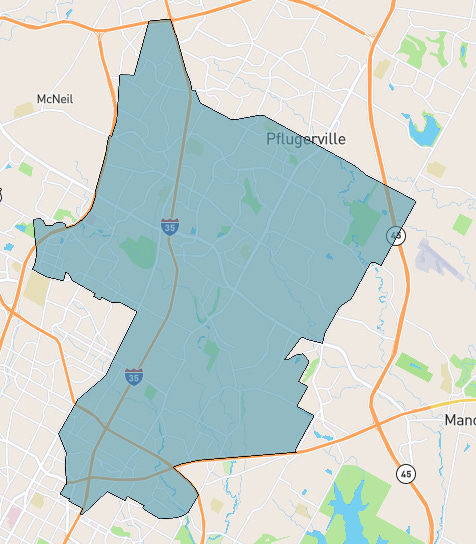
HD50 is one of the most diverse districts in Central Texas, with Latino and Black voters forming a clear majority coalition alongside a sizable Asian population. This is not a district built around persuading white moderates.
It’s young, mobile, and renter-heavy. Most residents are working-age adults, many of whom work remotely, with recent growth driven by job mobility and housing churn. The electorate skews toward younger professionals and tech, service, and public-sector transplants.
HD50 is highly educated and policy-literate. Voters are used to thinking in terms of systems and trade-offs and respond to clear policy outcomes and tangible benefits, not abstract messaging.
Housing is the central pressure point. Rents are high, ownership is low, and a large share of renters are cost-burdened, making affordability, renter protections, taxes, land use, and transit daily political concerns.
Economically, the district is squeezed. Incomes hover near the state average while costs keep rising, leaving many households caught between eligibility for aid and real financial security.
The incumbent.
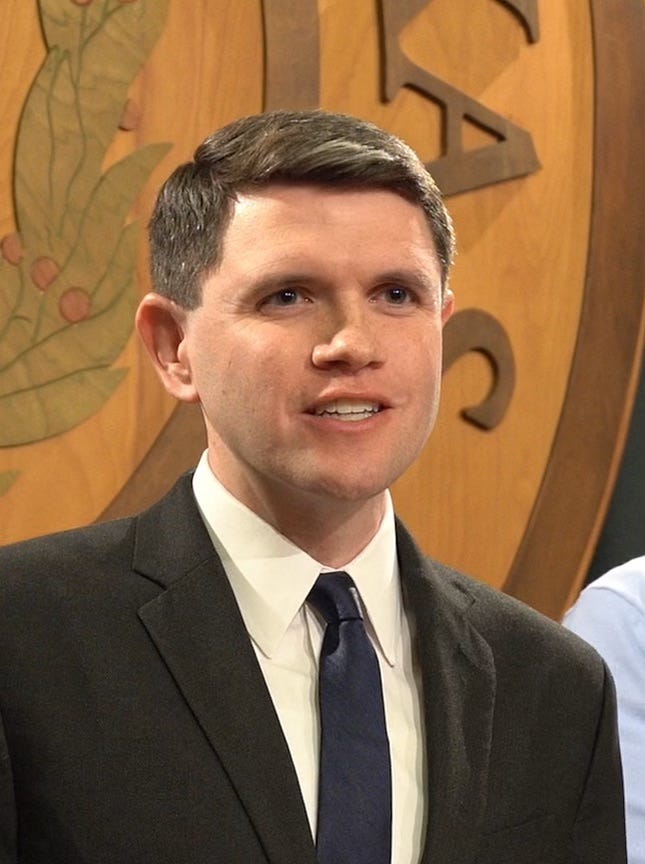
The incumbent for HD50 is James Talarico. However, he is running for the US Senate, which leaves this seat open.
There are five other Democrats in this primary.
In William Rannefeld’s own words.
Below are some questions I asked Rannefeld, based on previous reader polls, along with his answers.
Q: Should Texas move toward a universal, publicly funded healthcare system?
Yes! We have to remove capitalism from our healthcare system. Public health should not be profitable. Healthcare is a right, not a privilege.
Q: Do you oppose school vouchers and efforts to privatize public education?
Absolutely. The Texas education system was already failing before the Legislature approved school vouchers. A $5k voucher is not enough for children to get a full-time education at a private school. We need to divert those funds back to public schools.
Q: Should higher education in Texas be free or debt-free at public institutions?
100%. We need Texans to be educated. We want to fill high-skilled roles with Texans, and everyone deserves to reach their full potential. This shouldn’t be dependent on where you start in life.
Q: Should Texas guarantee free school meals to all K–12 students, regardless of income?
Yes! This is such a crazy question to ask. EVERYONE should want EVERY child to be fed. If the students are required to be in school, we are responsible for their well-being. Making sure every child has food is a no-brainer.
Q: Should Texas end tax breaks and regulatory loopholes for oil and gas companies, including exemptions from emissions reporting and waste disposal standards?
The Oil & Gas companies always have record profits. There is no reason to give them any tax breaks. We also must hold them accountable for making sure their work does not infect groundwater, does not pollute our air, and doesn’t disrupt the surrounding ecosystems.
Bonus Question: Who are your political role models, living or dead?
I’ve always been an admirer of Hillary Clinton since she was First Lady. She has always tried to make leaps and strides to take our country into the future. “Women’s rights are human rights” has always stood out to me just as much as “I have a dream”.
Most political power in Texas is decided long before November.
Primaries are where agendas are set. They’re where priorities get sorted. They’re where voters decide whether a seat will be held by someone who governs cautiously, someone who governs strategically, or someone who governs boldly. And yet primaries are also where turnout collapses, and entire fields of candidates go largely unexamined.
HD50 is a perfect example of why that matters.
This is a deep-blue, highly educated, renter-heavy district facing intense pressure around housing, cost of living, healthcare, education, and infrastructure. Whoever wins this primary will almost certainly be the next state representative. That means the real choice isn’t between parties. It’s between approaches, values, and governing philosophies within the Democratic Party.
William Rannefeld is one of several Democrats asking voters to look closely at what kind of representation they want. That’s the point of this series.
Democracy doesn’t work if voters only tune in for the general election. It doesn’t work if we only learn about candidates after consultants have narrowed the field. And it doesn’t work if we treat primaries as formalities.
Voting in every election is how power actually changes hands in this state. By paying attention early, asking questions, and showing up when it counts.
That’s what Meet the Candidates is here to help with.
You can learn more about William Rennefeld on his website, Facebook, Instagram, Twitter, and TikTok.
February 2, 2026: Last Day to Register to Vote
February 17, 2026: First Day to Early Vote
March 3, 2026: Primary Election
Click here to find out what Legislative districts you’re in.
LoneStarLeft is a reader-supported publication. To receive new posts and support my work, consider becoming a free or paid subscriber.
Follow me on Facebook, TikTok, Threads, YouTube, and Instagram.
I'm running late, Michelle, but I really liked this one too. Read it yesterday but just now posted it on bsky. Thank you!