


Every single primary season, the Republican Party of Texas puts non-binding resolutions on its primary ballots. These questions not only gauge their Party’s stance on specific topics but also help their GOP members with talking points throughout their races and during the Legislative Sessions.
For example, one of their resolutions in the last primary election was about eliminating property taxes. Almost 78% of Republican primary voters voted in favor of it.

During the 2024 election, numerous Republicans emphasized eliminating property taxes as a key campaign issue. Now, despite having a majority in the Legislature, Republicans didn’t eliminate property taxes or even lower them (just like they haven’t in the last 30 years), and really, that’s a whole other discussion, but for whatever reason, these talking points helped them win their elections.
Not only that, on their interviews on podcasts and right-wing media, I would hear them talk about how “Texans want all property taxes eliminated.”
Republicans put these ballot resolutions on their primary ballots every year because:
They’re part of their mobilization plan.
They can shape which primary a voter chooses in an open-primary state.
They can energize the base.
They can give the media something concrete to cover.
They can show the contrast with the other Party.
They could be used as a pressure tool on party leaders and elected officials.
But can they increase voter turnout?
While I’ve heard plenty of discussions around ballot resolutions increasing turnout, and my gut tells me that if the resolutions were populist enough, they may increase turnout, I wasn’t able to find any peer-reviewed studies that pointed to an answer either way.
The Texas Democratic Party has put ballot resolutions on the primary ticket before, in 2018 and 2020. I thought it would be fun to look at the Democratic primary turnout for those years and other years when they weren’t on the ballot.
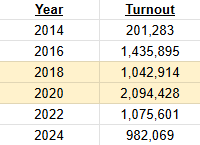
Primary turnout was pretty high in those years, but it’s unclear whether this was just a coincidence due to Democratic excitement or if the resolutions played a role.
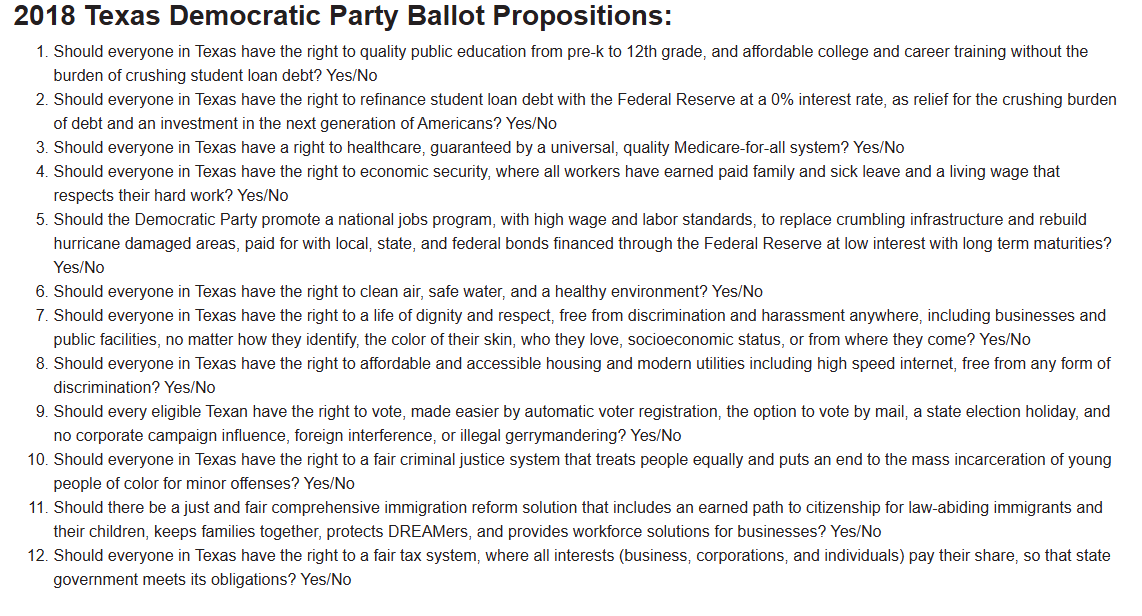
What were the ballot resolutions on the 2018 and 2020 primary Democratic ticket?
And 2020:
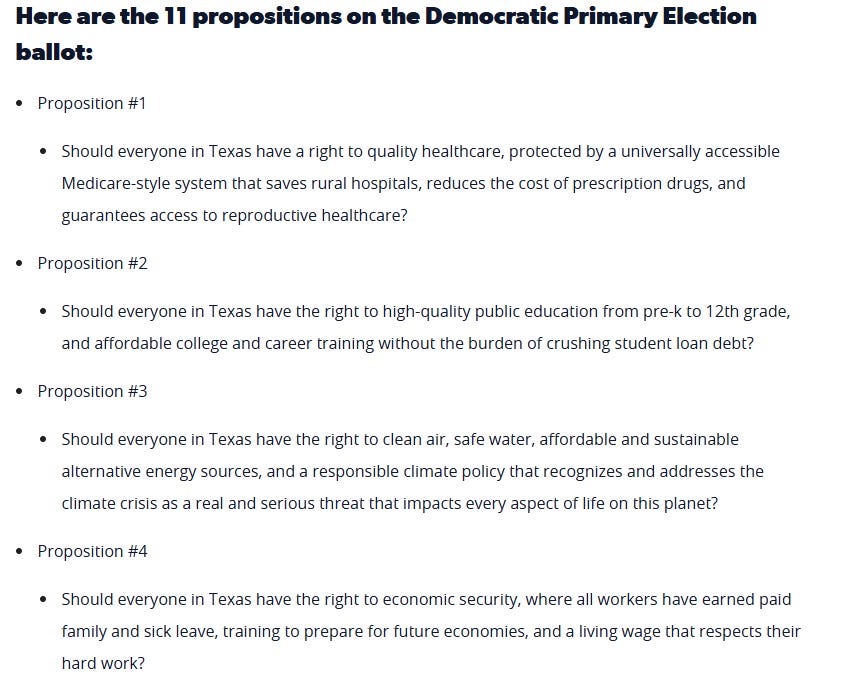
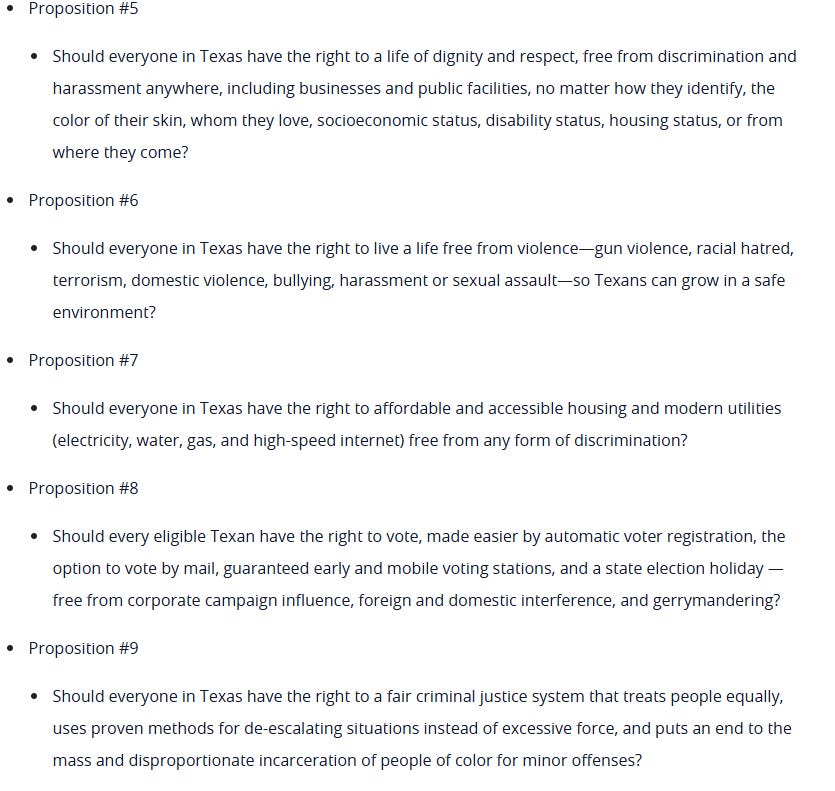
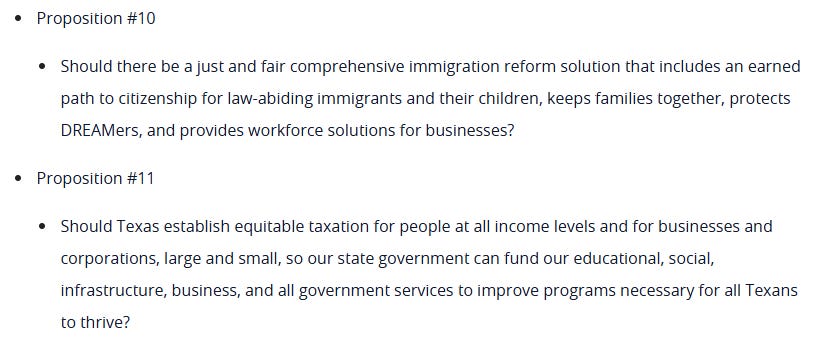
First of all, these questions are way too long. One thing I heard about why the Texas Democratic Party stopped adding these ballot resolutions is that they did not want voters to get bogged down. After re-reading these five years later, it’s easy to understand why.
Take the first question in 2020, for example, wouldn’t an easier way to have said that have been: “Should Texas support a universal healthcare system that lowers costs and protects access to care?”
My suggestion, for anyone listening, is that if they do ballot resolutions, all of the questions should be short and straight to the point.
Then, in 2020, it seems they asked a lot of repeated questions from 2018. Do Republicans do that? But once we’ve used these questions to establish that these are core beliefs of Democratic voters, we shouldn’t be asking the same questions again.
Why are we talking about this now?
Well, first of all, the Republican Party of Texas is having its quarterly meeting this weekend. Later, I’m planning on popping some popcorn and watching the trainwreck, but last night, they voted on several of their ballot resolutions.
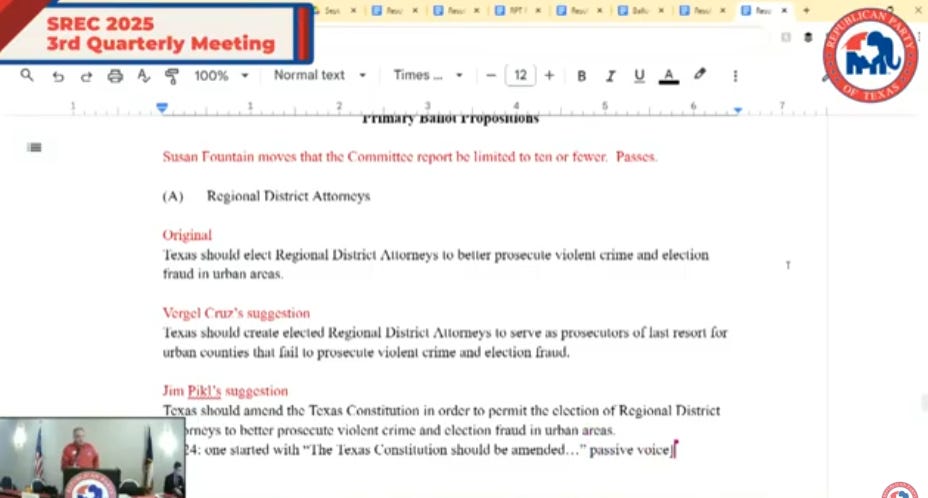
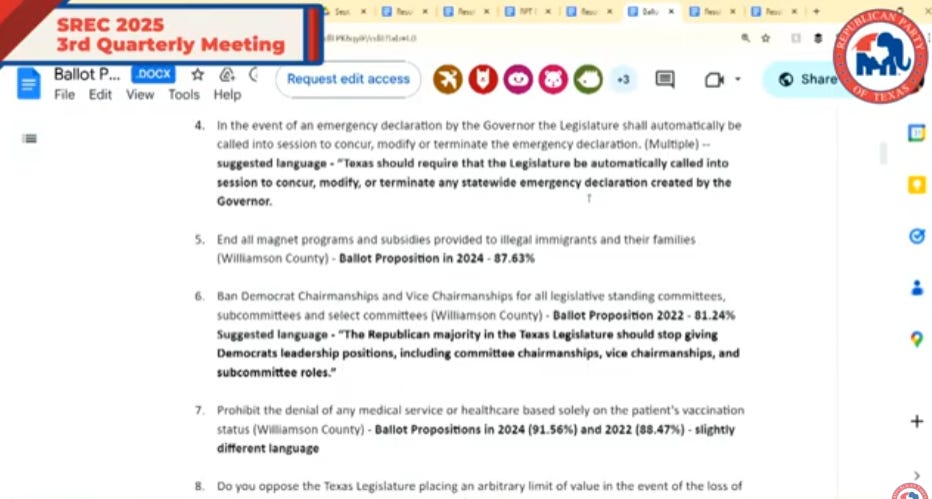
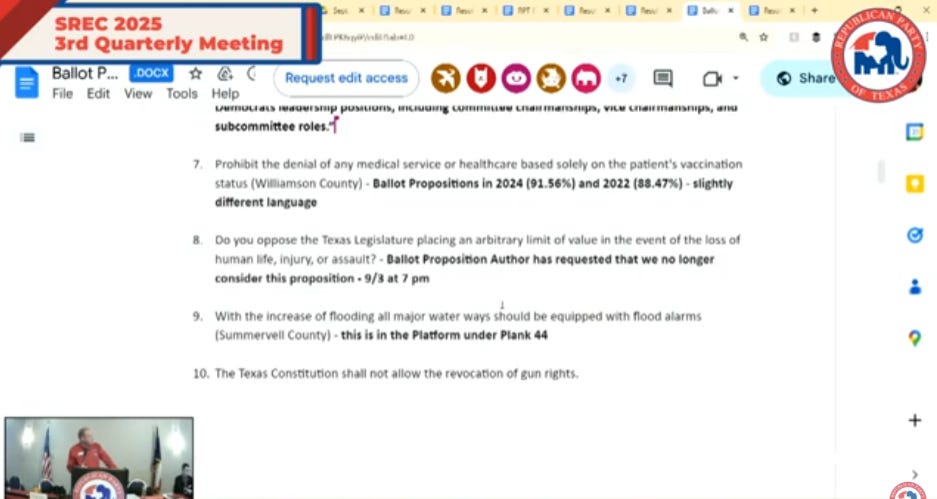
Yes, the Republican Party of Texas is completely bananas, and the majority of them aren’t even from Texas, but we all knew that. We hate them, but they often can serve a purpose of comedic relief.
And secondly, the SDEC, the Executive Committee of the Texas Democratic Party, is scheduled to have its quarterly meeting next week, and there is a group that is petitioning them to put ballot resolutions on the primary ballot.
So, what do you think?
Personally, I think they should, as long as the questions are short and straightforward, and there aren’t too many of them. I also feel that since Texas Democrats are entering their “Populist Era,” their questions should be geared toward the working class and should veer away from special interest topics.
Now, knowing the TDP and the SDEC, if they agree to the resolutions, every special interest group is going to jump out and want at least one identity politics question about their specific group, but this isn’t the election for that. And we’ve established in the previous ballot resolutions that all Texans deserve dignity and respect, and the freedom from harassment in public life.
These ballot resolutions should be a signal to the base that Texas Democrats know how hard things have gotten with the cost of living, taxes, and inflation under Republicans, and it should also signal that they have the solutions to fix it.
If you are a County Party Chair or a Precinct Chair and you agree with me…
Call your SDEC member this week and ask them to vote in favor of placing ballot resolutions on the primary ballot this March.
We won’t know what those resolutions will be or the direction they’ll take. If the Party agrees, they’ll ultimately vote on it before the ballots are printed (I don’t know when that is).
At the end of the day, ballot resolutions aren’t magic. They won’t single-handedly drive turnout, and they won’t fix the structural mess Republicans have left us with. But they are a tool, a simple, cheap, visible way for Texas Democrats to speak directly to voters about what we stand for. If written clearly, focused on kitchen-table issues, and framed around working-class priorities, they can mobilize, energize, and set the narrative heading into November.
The GOP has used these resolutions for years to feed their machine. It’s past time we started using them to feed our own.
So, let’s not overthink it. Let’s keep the questions short, sharp, and focused on the struggles Texans face every day. That’s how we make these resolutions a statement of purpose. And if the SDEC dares to put them there, it’s up to us, the base, to make sure they carry real weight.
November 4: Constitutional/TX18/SD09 Election
Click here to find out what Legislative districts you’re in.
LoneStarLeft is a reader-supported publication. To receive new posts and support my work, consider becoming a free or paid subscriber.
Follow me on Facebook, TikTok, Threads, YouTube, and Instagram.
The Democratic propositions of 2018 and 2020 were slam dunk yesses; only a hard core repturd would vote "no." Speaking of which, we should push for closed primaries. Not that it can happen in our world. Screwing up primaries has been a tradition at least since Bentsen beat Yarborough with the help of crossovers.
Amusing that 78% don't want property taxes. The reptilican base would scream bloody murder at the prospect of a 20% sales tax. And the only viable alternative would be a state income tax.
As I was reading the various propositions, it was so obvious the Dem ones are not only way too long, but also worded as if a Harvard grad wrote them. For goodness sake, start speaking to people in language they can understand regarding issues and ideas they care about instead of proving you can use commas correctly.