

I became a political writer the long way around. I was a teenage mom, then a single mom in my twenties, trying to figure out healthcare, childcare, and paychecks in a state that was not interested in helping me with any of that. That experience radicalized me.
Then came years of corporate work. Successful, miserable, and commuting long hours to listen to enough conservative talk radio to push me further left.
In 2012, Sandy Hook broke something open in me. I got involved with Moms Demand Action in Tarrant County during the Open Carry Tarrant County chaos and was recruited to help run Living Blue in Texas. That Facebook community is still going, 90,000 followers, 13 years, completely organic, just me and Dr. Jo still standing from the original crew.
In 2020, with COVID shutting everything down and my husband’s support, I cashed out my 401(k), enrolled in college, and finally became the writer I’d wanted to be since I was a kid. Molly Ivins was always my north star. I’ve got a bachelor’s in History and English now. I am living the dream. The one that took forty years and a pandemic to get to.
I built Lone Star Left around one rule I won’t compromise. No paywalls. Because I remember being that 25-year-old single mom who cared deeply about politics in Texas and couldn’t access political news because she was broke, and information shouldn’t cost money. This publication runs on paid subscriptions alone, no campaign money, no PAC money, no corporate sponsors. Just readers who believe in people-first politics and want to keep this thing going.
If that’s you, please consider becoming a paid subscriber. It’s how this stays free for everyone else.
Hill County found out it had a data center after the land was bought, after the bulldozers arrived, and after the company had already decided what would happen to them.
In November 2025, Nexus Data Centers announced it was building a campus outside Hubbard. They told the county they’d purchased 400 acres. Site preparation was already underway. Then they came back and told the county the actual number was 3,000 acres.
And 3,000 acres still doesn’t tell you what this actually is.
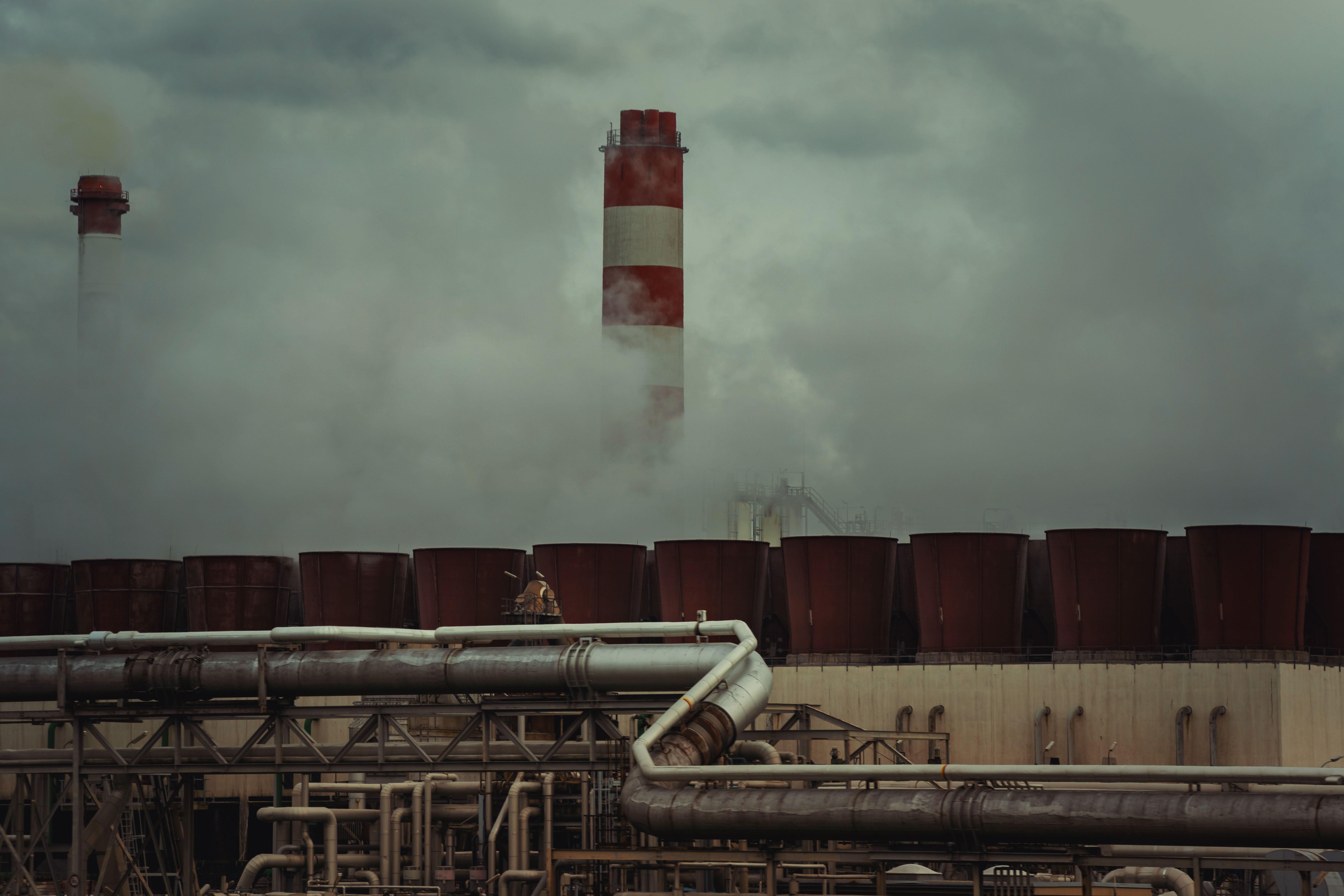
What Nexus filed with the Texas Commission on Environmental Quality describes a proposed 7.2-GW natural gas power plant. This will be the largest single generating facility in Texas history by a factor of two. Twice the size of the WA Parish complex outside Houston. Three times Comanche Peak nuclear. Fifty-five combustion units running continuously, 24 hours a day, 7 days a week, burning natural gas to power a data center that will never put a single watt on the grid. A church, a medical clinic, a public park, and a school sit within one mile of the fence line. Hubbard has 1,400 residents.
What this plant will do to the air.
The numbers in Nexus’s own permit application are worth reading.
The entire Hill County air pollution inventory for 2023 totals roughly 9.6 tons of nitrogen oxide per year. Nexus’s worst-case permitted NOx figure is 1,599 tons per year. That single project, on a single parcel, would add 166 times the entire existing NOx inventory of Hill County into an airshed that currently has effectively zero industrial pollution.
Nitrogen oxide is the primary precursor to smog, which causes respiratory disease, triggers asthma attacks, and is dangerous for children, the elderly, and anyone with a lung condition. TCEQ’s own preferred modeling methodology puts the Nexus project over that limit, at 70.86 ppb. Nexus’s own submitted modeling choice produces 69.9 ppb, just barely under. Pick your analyst, pick your outcome. The community living a mile from this facility has no say in which methodology gets used.
Then there’s the carbon. A natural gas combined-cycle plant running at 7 GW burns roughly 70–80 billion cubic feet of gas per year at full buildout, emitting somewhere in the range of 15–20 million metric tons of CO2 annually, comparable to the annual emissions of a mid-sized country. Texas has no carbon pricing. TCEQ’s review process doesn’t require any analysis of climate impact. It just issues the permit.
And the noise? 55 combustion units running continuously, 24/7 industrial lighting, in an area where the nighttime baseline is 20–40 decibels. An unmitigated power block of this scale runs 80–90+ decibels at the equipment. There is no Texas state noise standard for industrial facilities in unincorporated rural areas. No one is responsible for it. Linda Pauley at a Hill County Commissioners Court meeting said, “The noise that this data center generates — what is that going to do with those poor people that live maybe two miles from this data center?”
Texas Republicans made this inevitable.
Texas counties don’t have zoning authority. Texas cities do. This is a deliberate structural choice, encoded in state law over decades, that has left rural communities with no mechanism to shape what gets built next to them.
As UT-Austin land use professor Robert Paterson told the Texas Tribune, “Texas has always viewed counties as rural toddlers that can’t be trusted with full powers.”
Data center developers have now mapped it into their site selection strategy. A Texas Tribune analysis found that nearly half of the 248 planned data centers in Texas are headed for unincorporated areas. They are specifically targeting the places where communities have no power to say no.
That regulatory vacuum was built by thirty years of Republican supermajority governance that treated local control as a threat to business development, stripped county authority at every opportunity, and handed the Texas landscape to whoever could write the biggest check. What the data center industry found in 2025 is the same sweet spot that the oil and gas, CAFO, and fracking industries found before it.
The moratorium they tried.
In February 2026, Hill County commissioners approved a reinvestment zone, the legally required first step to begin tax abatement negotiations with Nexus. Then Nexus withdrew from the tax deal entirely. The project was moving forward with or without the county’s cooperation. County Judge Shane Brassell confirmed this meant the county was “limited in what it can do” since Nexus already owned the land.
On May 12, 2026, Hill County commissioners voted 3–2 to pass the first county-level data center moratorium in Texas history. The moratorium didn’t even touch Nexus, already under construction, already exempt. It only applied to new projects. Commissioner Jim Holcomb said, “The data center folks have found a sweet spot in the state that has limited regulations, limited enforcement, limited code, and they’re coming faster than we can keep up with.”
They knew it was legally risky. The county’s own attorney told them, “You don’t have a legal basis. If you vote to enact this, I believe we will very quickly be in litigation.” Brassell, Holcomb, and Commissioner Larry Crumpton voted yes anyway. That took courage. What happened next was the point.
The State’s response was immediate.
The same day Hill County voted, Heritage Foundation-aligned Senator Paul Bettencourt sent a letter to Attorney General Ken Paxton asking him to “investigate” any counties implementing moratoriums and “explore any necessary legal actions.” A preemptive threat was delivered the same day a rural county dared to try to protect itself.
This is how Republican governance in Texas actually works. When a county in the path of corporate development tries to slow things down, the Republican cavalry arrives to help the developers.
Fourteen days later, RCM Hill LLC, a developer behind a separate proposed 1,235 MW campus in Hill County called Project Aquila, filed a federal lawsuit against Hill County, Judge Brassell, and the two commissioners who voted for the moratorium, seeking $100 million in damages. RCM Hill doesn’t even own land in the county yet. The lawsuit argued the moratorium jeopardized the project’s ERCOT interconnection status and a $61.75 million capacity deposit due July 24. Investors, the company claimed, lost confidence once the moratorium clouded the project’s legal standing.
Resident Tim Lyness told the commissioners court, “I couldn’t imagine being sued for $100 million from some carpetbagger who doesn’t even own land in our county. It’s BS.”
It is BS. It’s also exactly how this system was designed to function. Corporations first. People last. Just as Republicans wanted.
Twenty-three days.
The moratorium lasted twenty-three days.
On June 4, all five commissioners voted unanimously to rescind it. After the vote, one commissioner said, “Unfortunately, we tried.” Commissioner Scotty Hawkins then resigned from his seat the same day, without explanation.
What replaced the moratorium is a checklist. Developers must now disclose expected water use, traffic impacts, noise levels, and economic effects. The checklist itself acknowledges that data center projects “require a level of technical review beyond the expertise and resources available within county government.” There is no mechanism in the checklist to deny a project based on any of that information.
Nexus is still under construction. First phase expected online by the end of 2026. The residents living a mile from 55 continuously running combustion turbines didn’t get a vote, didn’t get a hearing that mattered, and don’t have a state government that will protect them.
They got a checklist.
What you Can Do
The TCEQ air permit for the Nexus Hubbard Power plant (Permits 183046, PSDTX1700, GHGPSDTX269) is still under review. Comment now at tceq.texas.gov. Affected persons can request a contested case hearing, the only formal mechanism for community input that carries legal weight.
Contact your state legislators. Counties need the authority to regulate industrial development. That requires legislation. That requires pressure.
Share this story. Hill County is not alone. Hood County, Hays County, and dozens of unincorporated rural communities across Texas are facing the same calculus right now. The industry found the sweet spot. The only way to close it is to make leaving it open politically expensive.
This article is part of an ongoing series on data centers, water rights, and corporate power in Texas. Previous pieces:
Abilene Is Paying The Price For Texas’ Billionaire Giveaways
Project Matador: The Biggest Billionaire Giveaway In Texas History
In Reeves County, The Poorest Kids Pay For Microsoft’s AI And Chevron’s Emissions
Click here to find out what Legislative districts you’re in.
LoneStarLeft is a reader-supported publication. To receive new posts and support my work, consider becoming a free or paid subscriber.
This is all the more reason to vote Democrat all the way down the ballot. The state can put a halt to this. Talarico in Congress is great. But, we need Democrats in Austin to represent and protect the people. Thanks again to Michelle for clear, focused reporting on the material facts and operative issues for Texans.
Thank you for this very important information. I keep shaking my head; why do people constantly vote against their own interests (by voting Republican)?