

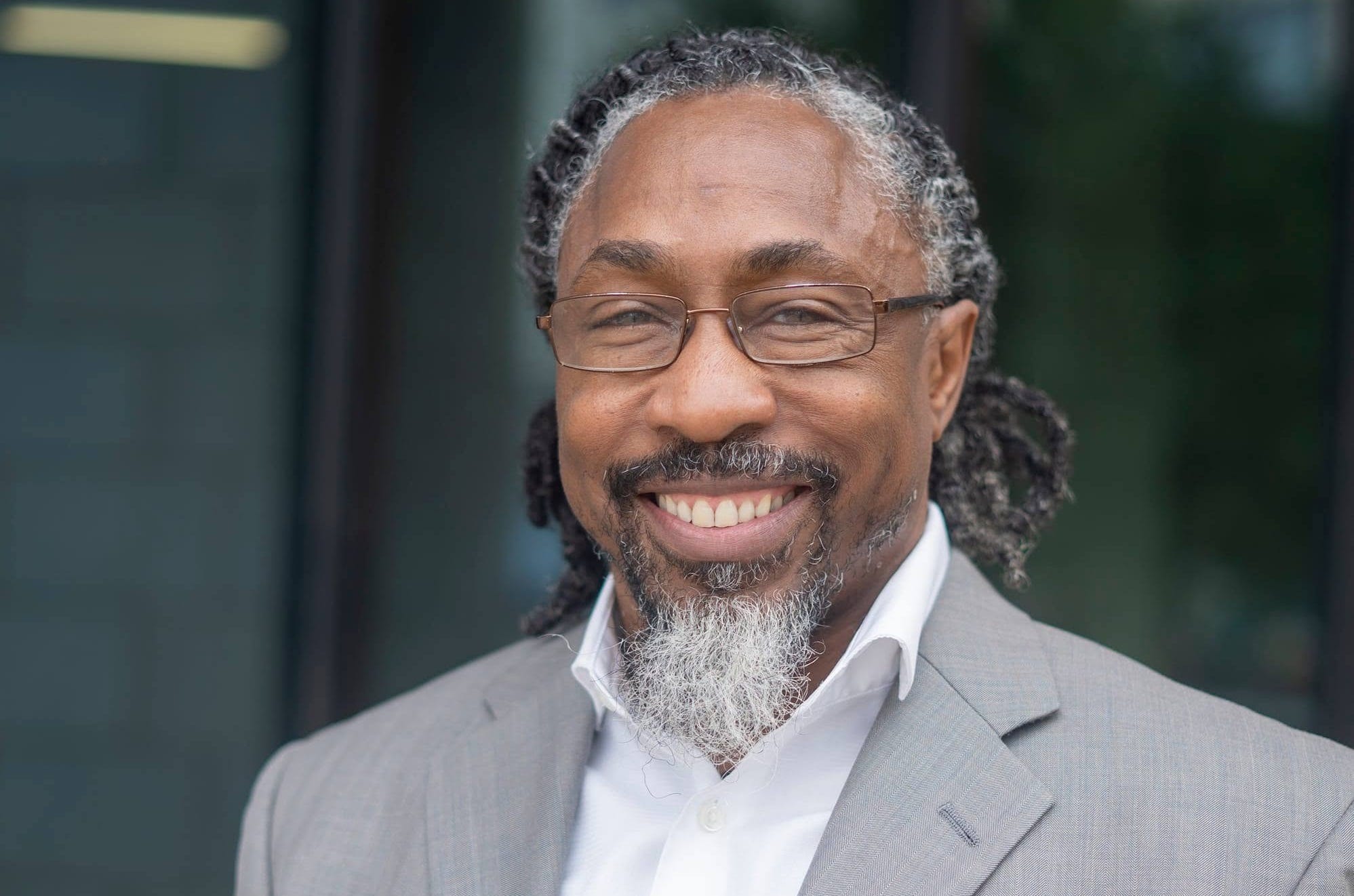
Note: We only have 101 days left until the election, or 15 more weekends. From now until the election, I’ll be doing TWO Meet the Candidate episodes each weekend. A few days ago, I asked readers, “What did they want to see more of?” The number one answer was, “Democratic Candidate Spotlights.”
This series is called Meet The Candidates. Over the next three months, I’ll spotlight a handful of Democratic races each month, mainly in the Legislature and in Congress. These aren’t endorsements. They’re introductions, a way to understand who’s running, the districts they hope to represent, and what’s at stake for people across Texas.
Who is Detrick Deburr?
He’s a software engineer, and he’s part of the last quarter century sitting in planning and zoning meetings. Planning and zoning is where decisions about how North Texas grows get made.
He’s also a father of three, grandfather of three, a member of Omega Psi Phi, and the kind of guy who writes books in his spare time. Two of them, actually. “Building Gamified Websites” in 2013, and back in 2001, “Deal Us In! How Black America Can Play and Win in the Digital Economy.”
His platform is public education funding, Medicaid expansion, and building out the social safety net. Nothing radical.
The district.
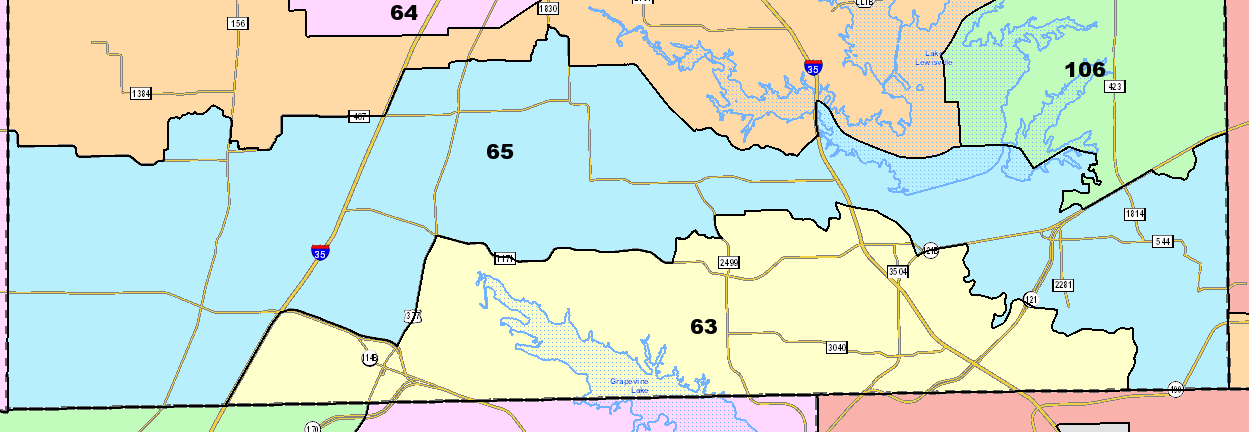
This is a Denton County seat. It’s 49.1% non-Anglo. Hispanic population’s pushing 20%, Asian population’s at nearly 16%, Black population’s at 12.5%.
It’s also rich, and it’s educated. Per capita income is $58,933 against a state average of $40,752. More than half the adult population, 53.4%, has a bachelor’s degree or higher. Statewide, that number’s 33.8%. Nearly a quarter of workers work from home.
And it’s growing fast. Total population went from 202,249 at the 2020 Census to an estimated 221,696 now. Nearly a third of the housing stock was built after 2010.
So, HD65 is the exact profile of suburb that flipped blue nationally starting in 2018 and never flipped back. Educated, diversifying, growing, allergic to chaos.
In 2024, DeBurr lost 60.3% to 39.7%. Yeah, this is his second time running. But we know that in the last election, 1.4 million Democrats stayed home, and it just sucked across the ticket.
At the top of the ticket in that same district that same year. Harris got 40.9%. Colin Allred got 43.1%. DeBurr ran behind both of them, by up to 3.4 points behind Allred specifically.
That’s a downballot drop-off problem, from name ID, from a lightly funded campaign, from voters who’ll punch Democrat for president or Senate and then just stop paying attention by the time they hit the state house row. Which means the ceiling in HD65 is already higher than DeBurr’s own 2024 number suggests. The district’s baseline Democratic lean. Closer to low-40s.
National conditions in 2026 point toward a Democratic advantage. Generic ballot polling has consistently shown Democrats ahead, with some surveys putting the margin as wide as double digits and others in the more modest mid-single digits, and Trump’s approval has been sitting in the high 30s to low 40s most of this year.
Caveat. Not everyone agrees this is a guaranteed wave. Some analysts point out the generic ballot advantage has been more stagnant month to month than the 2018 buildup was, and Republican-favorable redistricting has raised the floor on how many seats the GOP can lose even in a bad environment.
For HD65 specifically, the ingredients are there. A favorable national environment, a diversifying district, and an undersold 2024 baseline. What it needs now is a campaign that closes the gap between the top of the ticket and the state house line.
The incumbent.
Mitch Little is the guy who went viral for his interview on CNN when he was asked, “Why do this mid-district redistricting?” And he answered, “Because we can.”
Little was also one of Ken Paxton’s impeachment managers. He’s a lawyer, and a good one. An ethical one? That’s a whole other discussion.
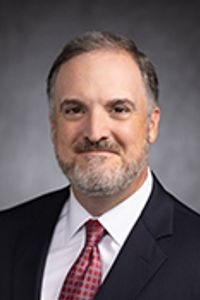
Also, Steve Bannon campaigned for him.
In Detrick DeBurr’s own words.
Below are some questions I asked DeBurr, based on previous reader polls, along with his answers.
Q: Do you support a statewide minimum wage increase to at least $15/hour?
I support raising the minimum wage to at least $15 per hour. However, $15 may not be enough for many Texas families. According to MIT’s Living Wage Calculator, each adult in a Texas family with two working adults and two children needs to earn about $24.45 per hour to pay for basic needs.
Living costs are different across Texas. Housing, food, childcare, and transportation often cost more in cities like Austin, Dallas, Houston, and Fort Worth than in rural towns. Because of this, one wage may not work for every community.
I propose the **Texas Local Living Wage Act**. This law would allow cities to set their own minimum wages based on local costs. Each city would study the cost of basic needs before setting its wage. The law would also change current Texas rules that limit the power of cities to set local minimum wages.
After setting its wage, each city would adjust it once a year based on the **Consumer Price Index for Urban Wage Earners and Clerical Workers (CPI-W)**. This index measures how prices change over time.
The wage could increase by no more than 3% each year. It would never decrease, even if prices went down. If inflation rose above 3%, the extra amount could be added in a later year. This would help workers keep up with rising prices while protecting businesses from sudden cost increases.
Businesses with fewer than 50 workers could slowly raise their wages over six years. They would follow a clear schedule during that time. This would give small businesses more time to plan for higher labor costs.
This plan would give local communities more control over wages. It would also help workers pay for basic needs while giving businesses time to prepare.
Q: Do you oppose school vouchers and efforts to privatize public education?
I oppose using public money to pay for private education because it may weaken public schools over time. The Texas Constitution says the state must support a strong system of free public schools. Giving public money to private schools makes it harder for the state to meet this duty.
Texas public schools receive much of their funding based on student attendance. Voucher programs may encourage families to leave public schools. When students leave, public schools may lose money. However, many of their costs do not go away. Schools must still pay for teachers, buildings, buses, safety, and special programs.
Private schools do not always follow the same rules as public schools. They may choose which students to accept. They may not provide the same services for students with disabilities. They also may not have the same rules for sharing information about their money, policies, and results.
Vouchers may not give every family an equal choice. Some private schools charge more than the voucher pays. Families may also face transportation costs. In some areas, there may not be a private school nearby. Some schools may refuse to accept certain students. Wealthier families are often better able to handle these barriers.
Texas should show that vouchers help students without hurting public schools. The state should study who uses vouchers, which schools receive the money, how students perform, and how the program affects public schools. Until the state can prove that the program works fairly, new education money should go toward improving public schools that serve every child.
Q: Should higher education in Texas be free or debt-free at public institutions?
Texas should stop arguing and start fixing college costs.
Our state Constitution says Texas must support public education. People may disagree about whether that means free college by law. That debate can continue. But families need help now.
Today, a high school diploma is often not enough to get a good-paying job. Many jobs need more training after high school. That training can be a certificate, an apprenticeship, a two-year degree, or a four-year degree.
So Texas should make sure every student has a low-cost path to career training. A good first step is free community college for students who need help most. We should also support job training programs and apprenticeships that lead to real jobs.
Some people worry about cost. That is fair. But we can build a smart plan:
- Focus money on students with financial need
- Fund programs that lead to in-demand jobs
- Track results, like graduation and job placement
- Make schools show where money goes
This is not about giving everyone the same path. It is about giving everyone a fair chance.
Texas has always believed in public education. In today’s economy, that should include affordable training after high school. The big question is not _if_ we should do this. The big question is _how fast_ we can do it well.
Q: Should Texas guarantee free school meals to all K–12 students, regardless of income?
All K–12 students should get free breakfast and lunch at school. Summer meals should also be offered in communities where many families have trouble buying enough food. This is important because kids learn better when they are not hungry.
Research shows that hunger can hurt focus, attendance, behavior, and grades. When students do not get enough to eat, it is harder for them to pay attention and do their best work. Free meals for all students help schools make sure every child is ready to learn each day.
Programs that only help some students can miss kids who still need support. Families may miss forms, move during the year, or earn just a little too much to qualify but still struggle. Universal meals also reduce embarrassment, because everyone eats the same way and no one is singled out.
A smart plan can pay for this by using federal meal money, state funding, and local support for kitchen staff and equipment. Schools may also save time and money by cutting paperwork and unpaid meal debt. Some people say free meals should only go to low-income students, but universal meals are simpler, fairer, and make sure no child is left hungry at school.
Q: Would you support redirecting state subsidies from fossil fuels to fund community-owned solar, wind, and battery projects in low-income and rural areas?
Yes, I support moving state funding away from fossil fuels and using it for community-owned solar, wind, and battery projects. Texas must get ready for its growing energy needs. Our current plans are not enough. As the saying goes, the best time to plant a tree was 20 years ago. The second-best time is today.
Public money should help the public. It should create local jobs, make the power grid stronger, lower energy bills, and support Texas communities. For many years, Texas has given support to large companies, especially oil and gas companies. It is time to rethink this plan and invest in the clean energy and battery storage we will need in the future.
Community-owned projects would make sure that local people share in the benefits. They would help Texas meet its energy needs while building a power system that is more reliable, affordable, and fair.
Bonus Question: What does being a Democrat mean to you in 2026?
Being a Democrat today means standing up for working people. That means caring about things families deal with every day, like fair pay, affordable homes, health care, and stable jobs.
Democrats also care about people’s rights—like the right to vote, workers’ rights, women’s rights, and equal treatment for everyone. Democrats may not agree on every issue, but they agree that people should be free to live their lives, as long as they do not hurt others.
Being a Democrat means wanting a government that works well, is fair, and helps people. It means fighting corruption and trying to do the most good for the most people.
HD65 is waiting for a correction.
Whether Deburr gets the resources to close the gap between Allred’s number and his own is on the rest of us. With a favorable national environment, a candidate like Mitch Little, and a higher previous baseline at the top of the ticket, Deburr has an opportunity to flip this district.
Also worth noting, earlier this year, Deburr received the Texas Progressive Caucus’ endorsement.
If you’re in Denton County, or you know somebody who is, share this. That’s the whole ballgame in a district like this.
You can learn more about Detrick Deburr on his website, Facebook, and Instagram.
101 days until the November election!
Did you know you can find links to all the previous Meet the Candidate articles on these lists?:
Click here to find out what Legislative districts you’re in.
Thank you, Michelle! Detrick sounds very sensible to me. Just shared on bsky.