

This series is called Meet The Candidates. Over the next fourteen months, I’ll spotlight a handful of Democratic races each month, mainly in the Legislature and in Congress. These aren’t endorsements. They’re introductions, a way to understand who’s running, the districts they hope to represent, and what’s at stake for people across Texas.
Who is Dr. Regina Vanburg?
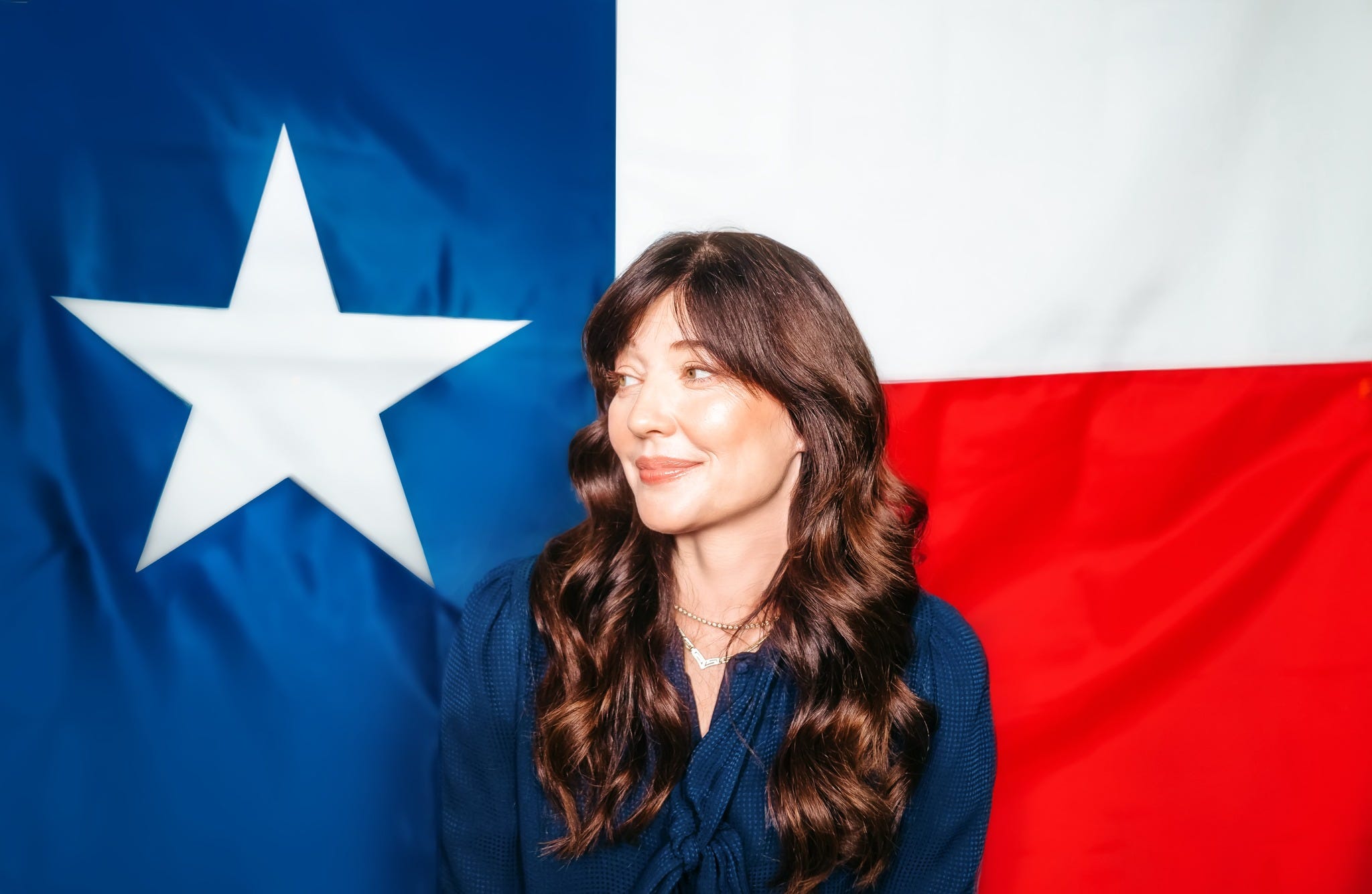
Dr. Regina Vanburg is a lifelong public servant. The daughter of an immigrant and two military veterans, she grew up in Bandera, where service was a household rule. From Hill Country classrooms to VA hospital corridors, she’s spent her life doing the kind of quiet, unglamorous work that actually changes lives.
Vanburg double-majored in Government and History at UT Austin, earned her master’s in Counseling from St. Edward’s, and went on to complete her doctorate in Psychology at Our Lady of the Lake in San Antonio. Her early career took her to the PTSD Clinical Team at the Audie Murphy VA Hospital, where she treated veterans who’d seen the worst of war and came home to a system that too often forgot them. Later, she joined the Kerrville outpatient clinic, and today she serves as a data analyst tracking the well-being of military recruits in basic training.
That blend of compassion and accountability runs through everything she does. “Public service isn’t about titles,” she says. “It’s about hard work and showing up for your community.” That’s exactly what she’s bringing to her run for Congress.
Vanburg’s campaign rests on a simple premise that government serves the people, not the other way around. Her platform blends progressive principles with practical Texas grit, including protecting water rights, making voting easier, ending dark money, taxing wealth rather than work, and treating climate as a national security issue. She calls for Medicare for All, union protections, renewable-energy investment, and stronger digital-privacy laws, including making doxxing a federal crime.
Texas isn’t broken, she says; it’s being sabotaged by greed, extremism, and politicians who treat power as a prize rather than a responsibility.
In a district known for its rugged hills and stubborn independence, Vanburg’s campaign feels like a throwback to what Texas politics could be again. Democracy that works. Water that’s safe to drink. Wages you can live on. Health care you can count on.
Because, as she puts it, “When democracy works, people thrive. When it doesn’t, only the powerful win.”
The district.
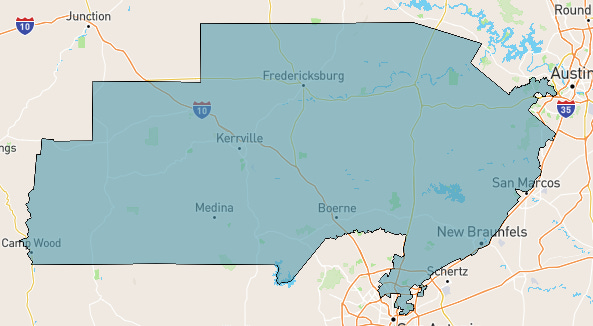
We’re not getting into new maps/old maps at the moment, I might cry.
Regardless, this is a 41% non-Anglo district in the heart of Hill Country. These areas are politically diverse. Kerrville and Fredericksburg lean older and more conservative, while San Marcos and northern Bexar County bring in younger, more progressive voters. Comal and Hays counties are among the fastest-growing in Texas, driven by suburban sprawl and new industry along the I-35 corridor, which has made housing, water rights, and infrastructure some of the most explosive local issues. Flooding and disaster preparedness would also be a hot topic in this campaign, I imagine.
Bexar and Hays counties provide the district’s population ballast and its Democratic base, while the Hill Country counties define its cultural identity, likely service-minded, land-conscious, and fiercely independent. Water scarcity, overdevelopment, and veterans’ healthcare consistently top local concerns. The mix of military families, educators, small-business owners, and ranching communities makes this district a microcosm of Texas itself, pragmatic, proud, and deeply aware that its future depends on both stewardship and reform.
The incumbent.
It’s Chip Roy 🤮, but Chip Roy has bigger dreams of becoming the next culture warrior and corrupt kingpin of Texas, and is running for Attorney General.
There are three Republicans in the GOP primary right now (more could enter), so who knows which will be left standing after the primary elections?

With an overperforming year expected for Democrats, this isn’t a safe red seat.
In Regina Vanburg’s own words.
Below are some questions I asked Vanburg, based on previous reader polls, and how she answered:
Q: Do you support a Green New Deal or similar large-scale federal climate action plan?
I support a Green New Deal — not as a slogan, but as a plan to rebuild our economy and protect our planet at the same time.
To me, the heart of the Green New Deal is about jobs, justice, and innovation. It’s about creating high-wage, sustainable jobs while addressing long-standing economic inequities and environmental challenges.
Texas should lead that effort. We have the talent, the resources, and the industry to be a pioneer in energy innovation — from renewables to next-generation fuels. Our future shouldn’t depend on boom-and-bust cycles. It should be built on steady, smart investment in clean technology and infrastructure.
Here in Texas 21, we also have unique environmental challenges — especially water preservation. As more data centers and developments move in, we have to protect our limited water resources and plan for a drier future. Responsible energy innovation means balancing economic growth with environmental sustainability.
I believe the federal government has a role to play in driving intentional innovation — investing in new technologies, enforcing accountability for corporate polluters, and supporting communities through the transition.
A Green New Deal should work for workers, reward innovation, and protect the only home we’ve got.
Q: Do you support universal, publicly funded healthcare?
Healthcare should be a public guarantee, not a private gamble. Every American deserves access to care without fear of bankruptcy.
As a provider, I’ve seen firsthand how our current system fails patients and clinicians alike. My patients and I are co-collaborators — we decide together what treatment is best for their specific needs. But too often, insurance companies act as the primary decision-makers. They determine what treatments can be offered, which diagnoses get approved, and when care can begin.
I share the same frustrations that so many providers do when considering working through insurance carriers — hours lost to prior authorizations, arbitrary denials of care, network restrictions, and mental health services carved out or underpaid. The current system puts paperwork before people.
That’s why I support a privately run, government-funded system — where doctors, hospitals, and clinics remain independent, but every American is covered through a public framework that puts care, not profit, at the center.
The benefits are clear: universal coverage, lower administrative costs, and true freedom for patients and providers. The challenges — funding, transition, and workforce protections — are real, but manageable if we take the time to craft policy guided by healthcare and industry experts.
Q: Would you support major tax reform, including raising taxes on billionaires and large corporations?
Absolutely — the sooner, the better.
Tax reform is desperately needed in this country. For decades, our tax code has rewarded wealth concentration and corporate loopholes while working families carry a disproportionate share of the burden.
To do it right, we need to bring together experts in economics, tax policy, and global finance to craft a robust, progressive tax system — one that closes loopholes, increases fairness, and builds in safeguards to prevent the ultra-wealthy from dodging their rightful contribution.
That includes addressing the challenge of mobile wealth — ensuring that assets held or earned in the United States remain taxable here, even if billionaires move their residency or stash their fortunes in tax-friendly havens abroad.
We can’t lose sight of the bigger picture, either. The impact of billionaires and large corporations not paying their fair share isn’t just an American problem — it’s a global one. Across the world, underfunded governments struggle to provide healthcare, education, and infrastructure because a handful of individuals and multinational corporations hide trillions offshore.
That’s why the rally cry of my campaign is “Tax wealth, not work.” The people who build this nation with their labor shouldn’t pay a higher effective rate than those who profit off speculation, inheritance, or offshore accounts.
I am a firm believer that your right to swing your fist ends where someone else’s nose begins. The right of the ultra-wealthy to amass and keep so much of our collective wealth that they stagnate the economy and squeeze working families — and governments — to the brink is one of the most serious issues facing our nation today.
Q: Should Congress ban corporate PAC money and implement public campaign financing?
Yes — I support banning corporate PAC money, implementing public campaign financing, and overturning Citizens United v. FEC.
Campaign finance reform is essential to restoring integrity to our democracy. The Supreme Court’s Citizens United decision opened the floodgates for unlimited corporate and billionaire spending in our elections, and the result has been exactly what many feared — policy shaped by wealth and access, not by the will of the people.
Elections should be contests of ideas, not bank accounts. Right now, too many decisions in Washington are influenced by who can spend the most, not who serves the best.
Public campaign financing — through small-donor matching or citizen-funded systems — would put elections back in the hands of the people. It levels the playing field, strengthens accountability, and lets candidates spend more time listening to voters, not dialing for dollars.
We have to make sure our government can’t be bought — not by corporations, not by lobbyists, not by billionaires like Peter Thiel or Elon Musk — not by anyone.
Free and fair elections are nonnegotiable in this country.
Q: Do you support DC statehood, Puerto Rico self-determination, and expanding voting rights through federal law?
Yes — I support D.C. statehood, Puerto Rico self-determination, and federal expansion of voting rights.
Every American deserves representation, not second-class citizenship. D.C. residents pay taxes, serve in the military, and live under federal laws, yet lack full voting power in Congress. The Washington, D.C. Admission Act (H.R. 51) is the right step toward remedying that.
Puerto Rico, too, should have the power to decide its political future. The Puerto Rico Self-Determination Act of 2021 gives people on the island a path to choose — via referendum, negotiations, and congressional ratification — whether they want statehood, independence, or something in between.
In these United States, we must pass federal laws that protect every citizen’s right to vote — standardizing access, blocking suppression, and closing gaps in representation. Addressing wealth inequality and ensuring free, fair, and inclusive elections are the two most important objectives for us as a nation right now.
Democracy works only when everyone’s voice counts. Denying representation is a failure of our principles.
Bonus Question: What does being a Democrat mean to you in 2026?
To me, being a Democrat in 2026 means humility, bravery, and ruthless conviction.
Humility — to admit what hasn’t worked, to take accountability for our shortcomings, and to listen when we need to do better.
Bravery — to say plainly that we know the difference between right and wrong, no matter how popular that may or may not be.
And ruthless conviction — to stand unflinchingly for justice, equality, and democracy, even when it’s inconvenient or hard. Even when it’s dangerous.
Being a Democrat isn’t about party loyalty — it’s about moral responsibility. It’s about believing that government should work for everyone, not just the powerful few.
Dr. Regina Vanburg is running to change who the game serves.
Her campaign is rooted in work and fixing systems, not fueling culture wars. Texas 21 is a district built on grit, service, and the belief that neighbors take care of one another, values drowned out by the noise of national extremism.
Whether you agree with every policy or not, Vanburg’s message cuts through. Democracy only works when it works for everyone. And in a year when the stakes couldn’t be higher, that’s precisely the kind of plainspoken, purpose-driven leadership Texas could use a little more of.
You can learn more about Dr. Regina Vanburg on her website, Instagram, and Facebook.
November 4: Constitutional/TX18/SD09 Election
Click here to find out what Legislative districts you’re in.
LoneStarLeft is a reader-supported publication. To receive new posts and support my work, consider becoming a free or paid subscriber.
Follow me on Facebook, TikTok, Threads, YouTube, and Instagram.
Go with the new maps. There will be no injunction issued and the new maps go into effect Dec 8. We will not have a ruling on the 2021 case which is all about how bad the existing maps are. We will not get a ruling on the 2025 maps. It is called delay delay then SCOTUS fealty to the Orange Idol. I know it sucks, it is awful but instead of focusing on the courts saving us, we need to start organizing and running in all 254 counties and the blue counties need to start acting like they are 10 points behind in every race. We need to stop fighting democrats in blue counties and start using all that money to fund races in red districts. Anyone who demands fealty whether a Democrat or a Republican needs to go. We need to stop this fucking purity politics and start talking about issues and focusing on community.
And, our city of Kerrville, just had to raise the premiums for all 1st responders, by alot.